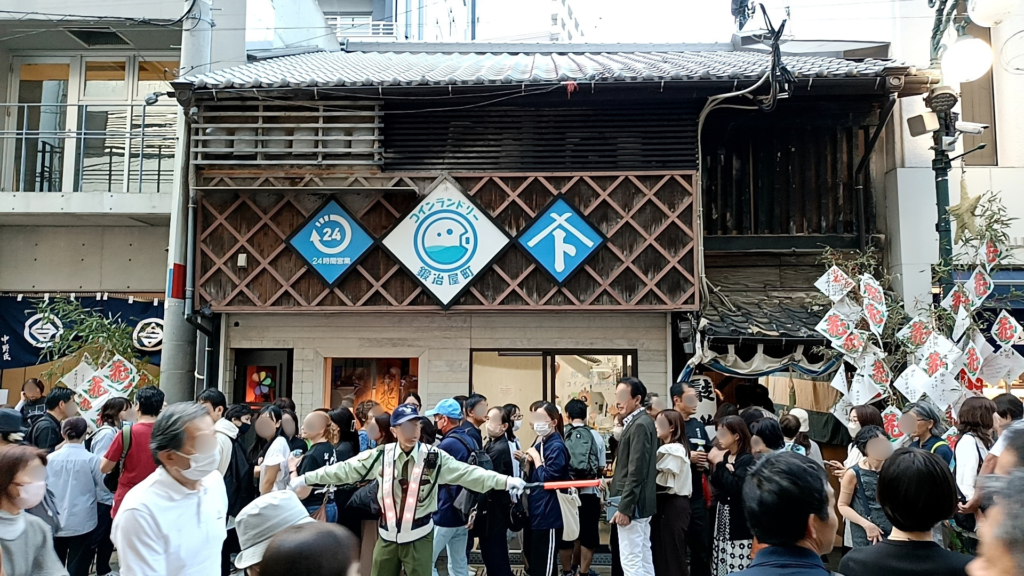
There is a small coin laundry in Kajiya-machi that I walk past all the time. On the evening of October 3rd, a crowd was lined up outside it, and it wasn’t for the washing machines.
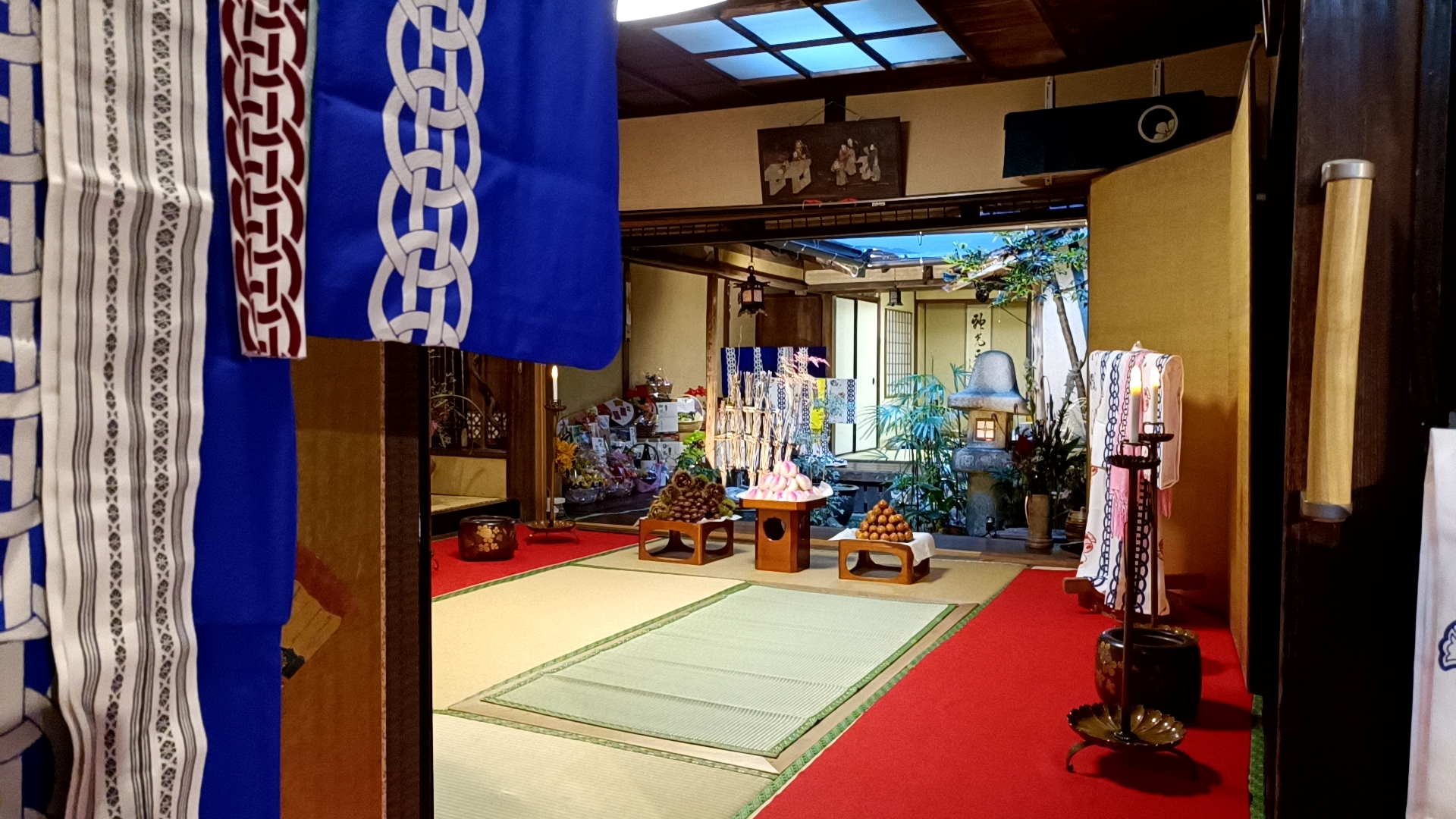
The line led down a narrow passage hung with faded blue-and-white curtains, each dyed with a family crest. At the end was a doorway, and through it, a room I had no idea existed: a zashiki, a formal tatami room, in a house that has clearly stood for more than a hundred years. Festival costumes hung at the entrance. Behind them were a gold folding screen and a hanging scroll, candles on tall stands, and pyramids of chestnuts, persimmons and pink peach-shaped buns. Beyond the room was a small inner garden with a stone lantern.
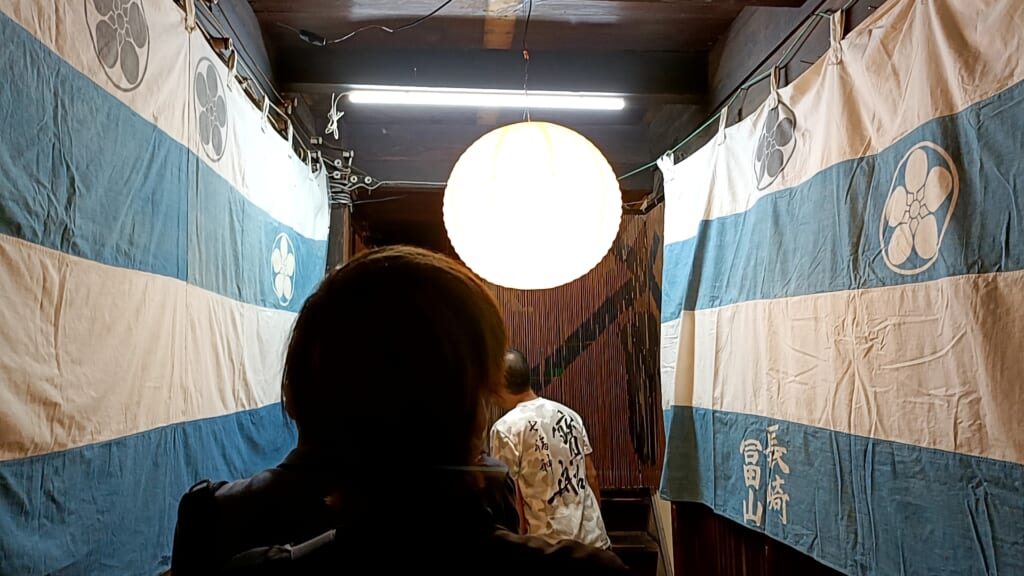
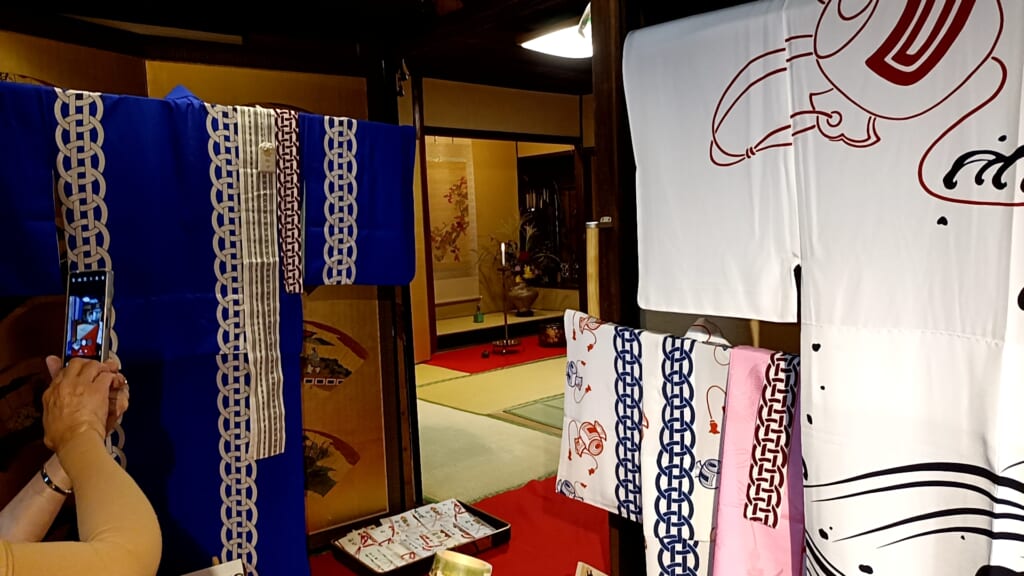
I couldn’t go in. I could only look from the doorway, then step aside for the next person.
This is Niwamise (庭見世), and it happens once a year.
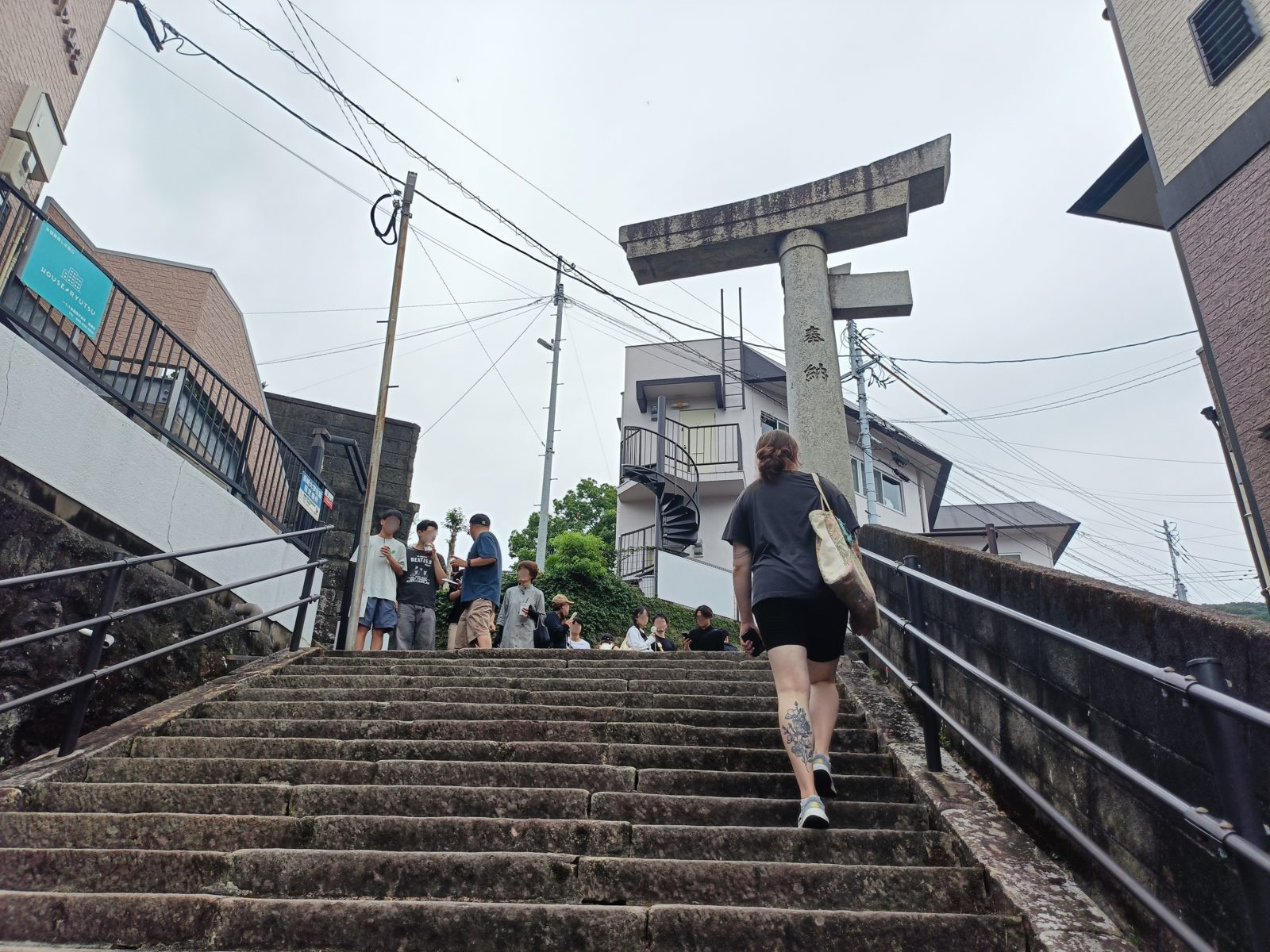
Nagasaki Kunchi, the autumn festival of Suwa Shrine, runs from October 7th to 9th and dates back to 1634. Each year a different group of neighborhoods, called odori-cho (踊町), performs. A town’s turn normally comes once every seven years. But the dances were cancelled for three years, from 2020 to 2022, during the COVID-19 pandemic, and the rotation was pushed back. So this year’s six towns are performing for the first time in ten years.
This year’s towns and what they perform:
- Imakago-machi (今籠町): hon-odori, a classical dance
- Aburaya-machi (油屋町): kawafune, a river boat
- Motofuna-machi (元船町): Tosen Matsuri, a Chinese trading ship
- Uwa-machi (上町): Kokkodesho, a drum float carried on the shoulders
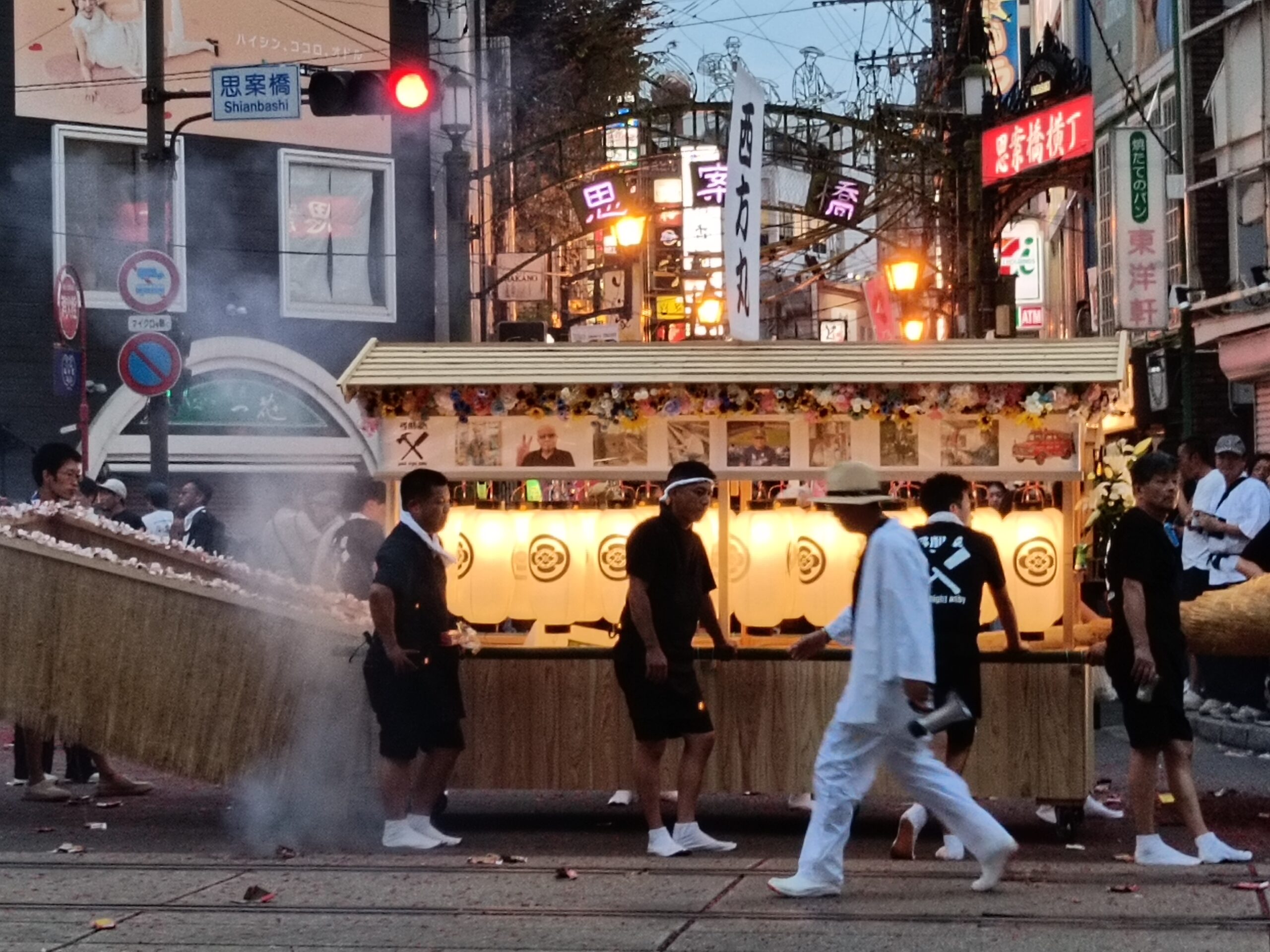
- Kajiya-machi (鍛冶屋町): the treasure ship of the Seven Lucky Gods
- Chikugo-machi (筑後町): Jaodori, the dragon dance
Four days before the festival, those towns set up displays along their streets, in shopfronts, garages and the front rooms of houses, and lay out everything that will appear in it: the kasaboko, the towering parasol-shaped emblem that leads each town’s procession, along with floats, costumes, props and instruments. Next to them are the gifts sent to the performers. Many displays can be viewed from the street, while some allow you to see into the building or garden from the entrance.
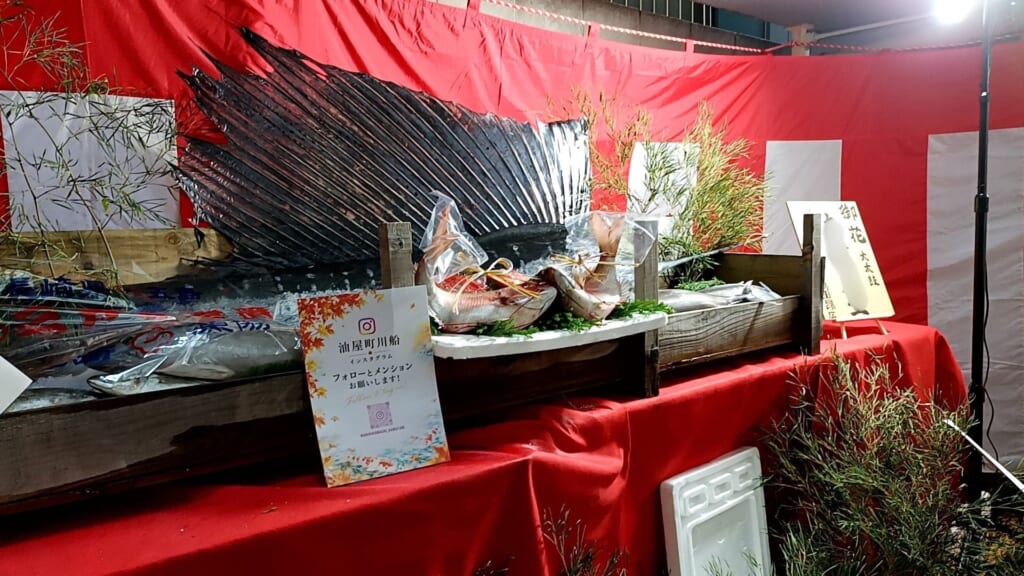
I started a little after 5 pm and visited two towns. In Aburaya-machi, the kawafune, the river boat the town will pull through the streets, sat in a garage hung with red-and-white curtains. Nearby were the ornaments of the kasaboko and rows of costumes, surrounded by stacks of gift boxes. One gift was an enormous fish with a fin like a sail, laid whole on ice.
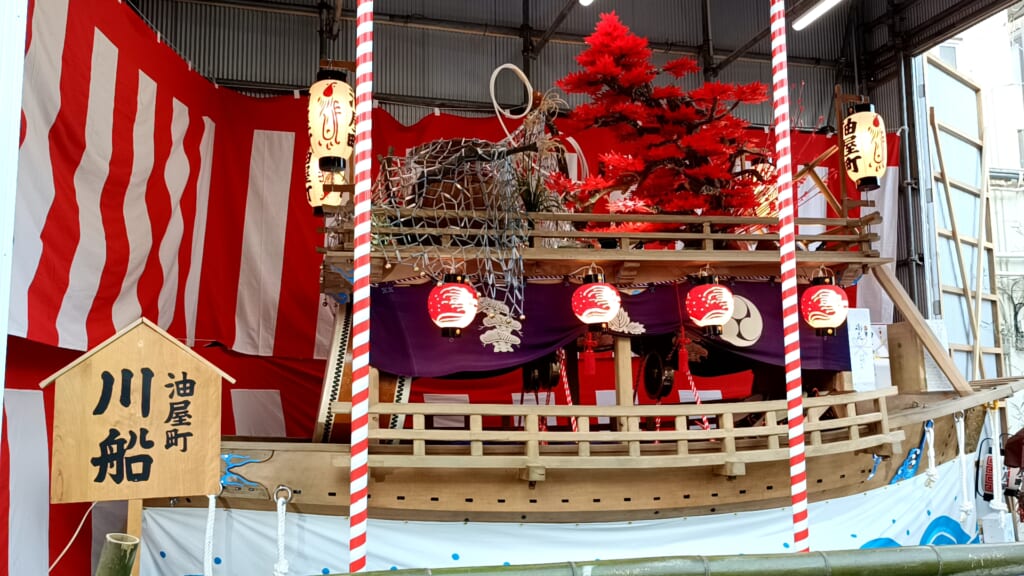
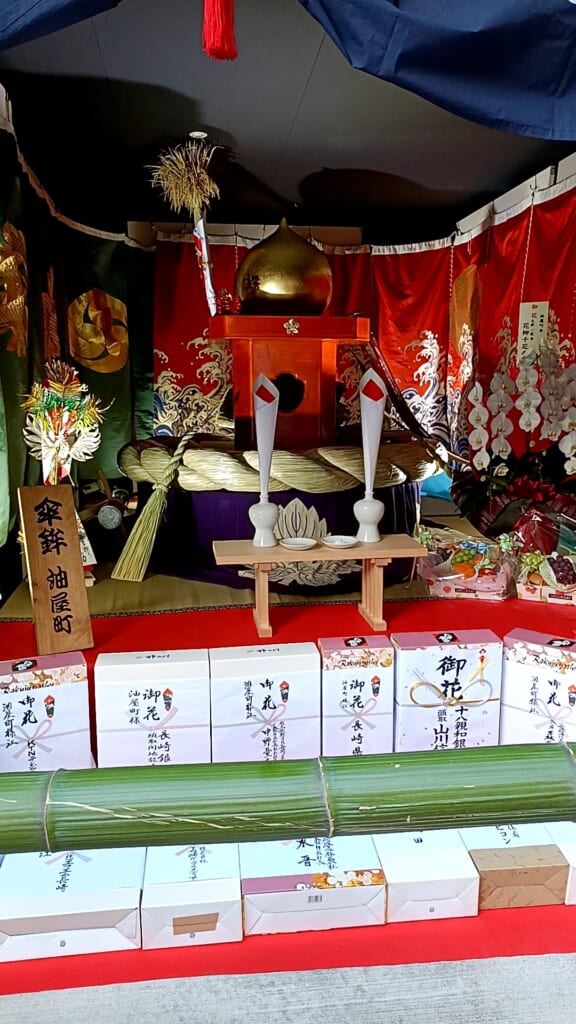
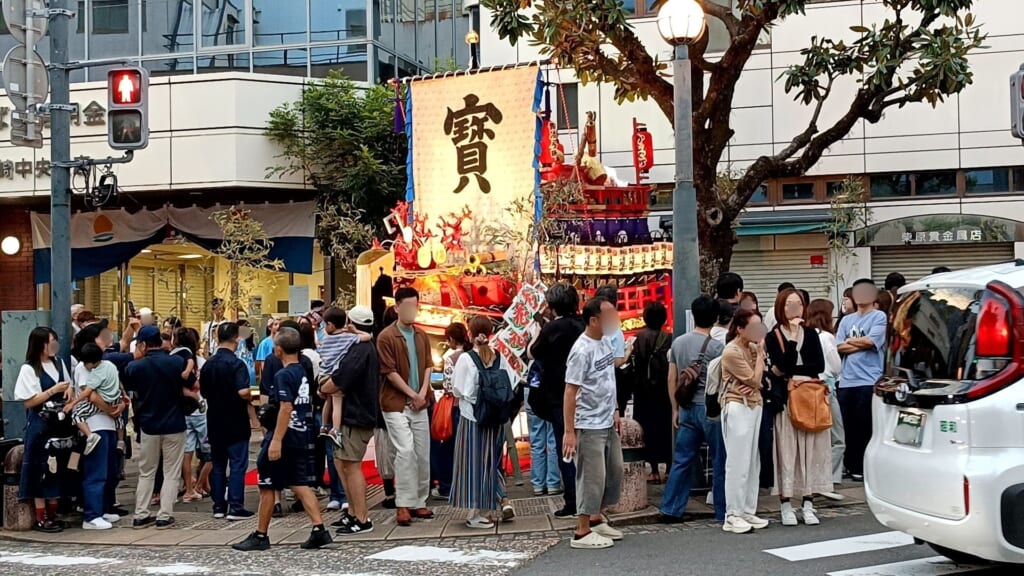
In Kajiya-machi, the treasure ship of the Seven Lucky Gods stood on a street corner with a crowd around it.
Everywhere, bamboo branches were hung with squares of white paper, each printed with a single red character on a green design: 花, hana, “flower.” In Kunchi, hana means a congratulatory gift, money or goods, sent to a town or to one of its performers. These gifts are marked with a sheet of paper called hanagami, usually handwritten with the names of the recipient and giver. The word is said to come from the theater, where a tip for an actor was called a flower.
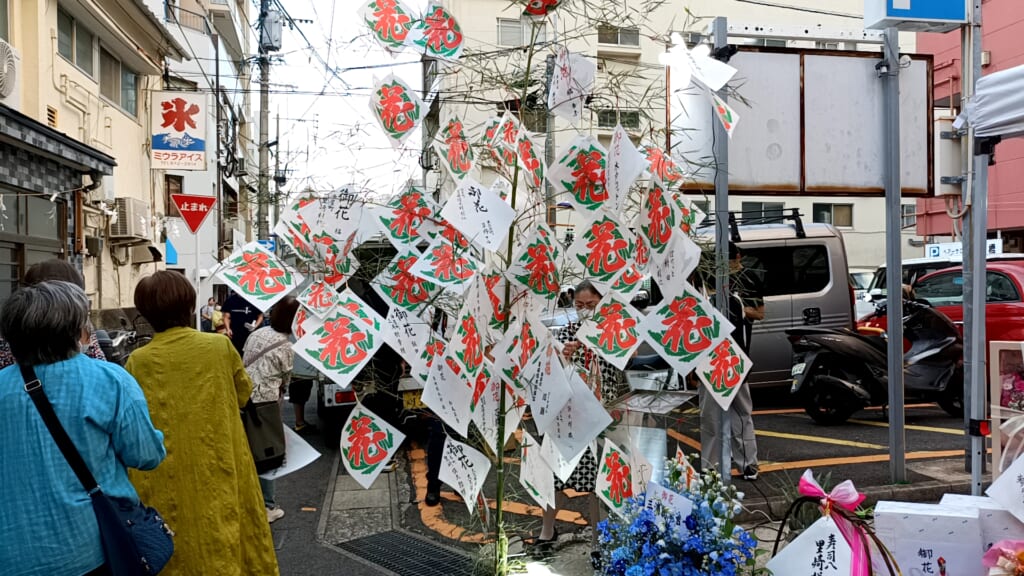
That is what stays with me. Every sheet is a person or a business standing behind the town, and hanging them out is a way of thanking each one.
A column published by the Nagasaki Traditional Performing Arts Promotion Association adds some history. On Niwamise, towns hang curtains dyed with family crests and show their kasaboko, floats and newly made costumes. Families once opened their gardens too, and brought out folding screens, hanging scrolls and furnishings handed down in the house. Today few old townhouses are left, and many displays are shared ones in garages, corners of office buildings and parks. The column also notes that Niwamise is not meant as an exhibition of gifts. It is a chance to look closely at the floats and costumes.
Which is why the room behind the laundry stopped me. It was the old way, still there, in a building I had never really looked at.
If You Go
- When: October 3rd every year, generally from around 5 pm to around 10 pm. Hours vary by location. Free to view.
- Where: In that year’s performing towns. They change every year, but they are always in central Nagasaki, easy to reach for visitors from overseas too.
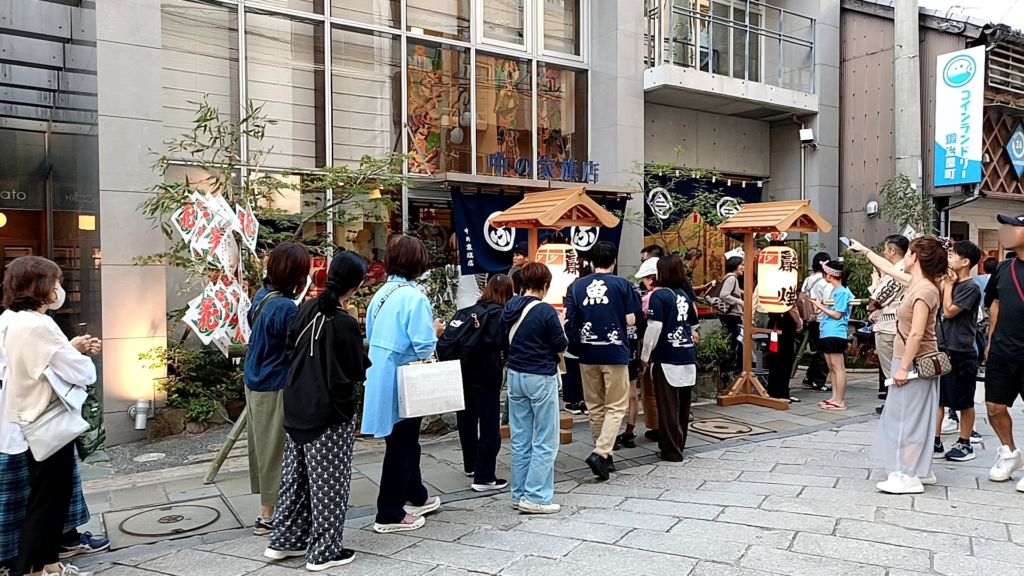
- Time: About 30 to 45 minutes per town, longer if you queue. This year there were lines at Hakusuido, a confectionery in Aburaya-machi, and in Kajiya-machi at the Nakanoya flag shop and the coin laundry next door.
- Crowds: The streets can be narrow and crowded, especially around popular displays.
- Etiquette: Some displays are in homes or working shops. Look only from areas open to visitors, and keep the line moving.
Information about Nagasaki Kunchi, especially events outside the main festival such as Niwamise, is often announced only in Japanese. Niwamise takes place every year on October 3rd. If you would like more details or need help arranging an English-speaking guide, please get in touch through our contact form.