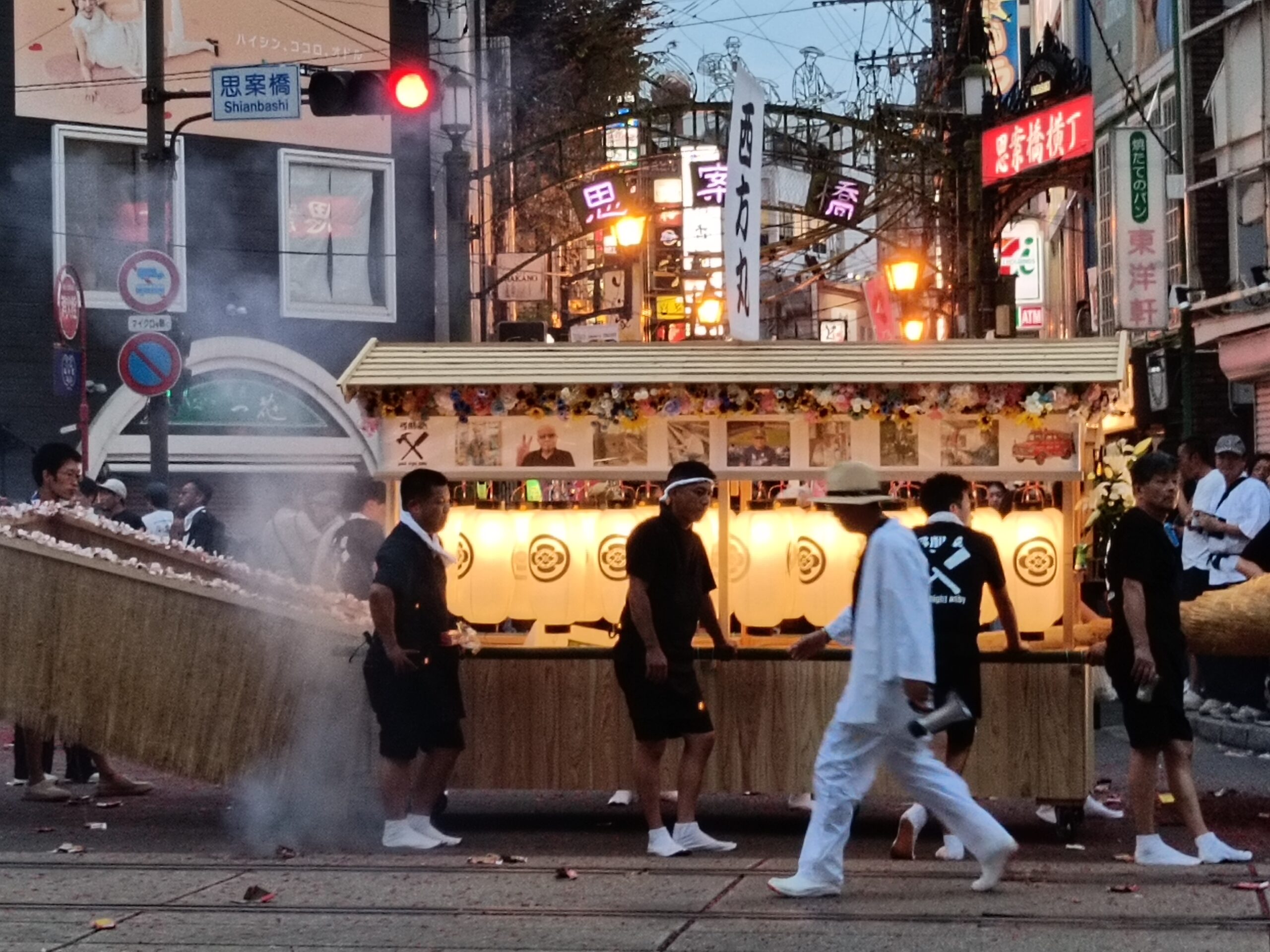
The night before, I had seen Aburaya-machi’s kasaboko standing still behind a bamboo rail at Niwamise. The next afternoon, I watched it spin.
October 4th is Niizoroi (人数揃い). Three days before Nagasaki Kunchi begins, each of the year’s performing towns shows its finished performance in its own neighborhood, in full costume, to the people of the town. It is the last rehearsal, and anyone can watch.
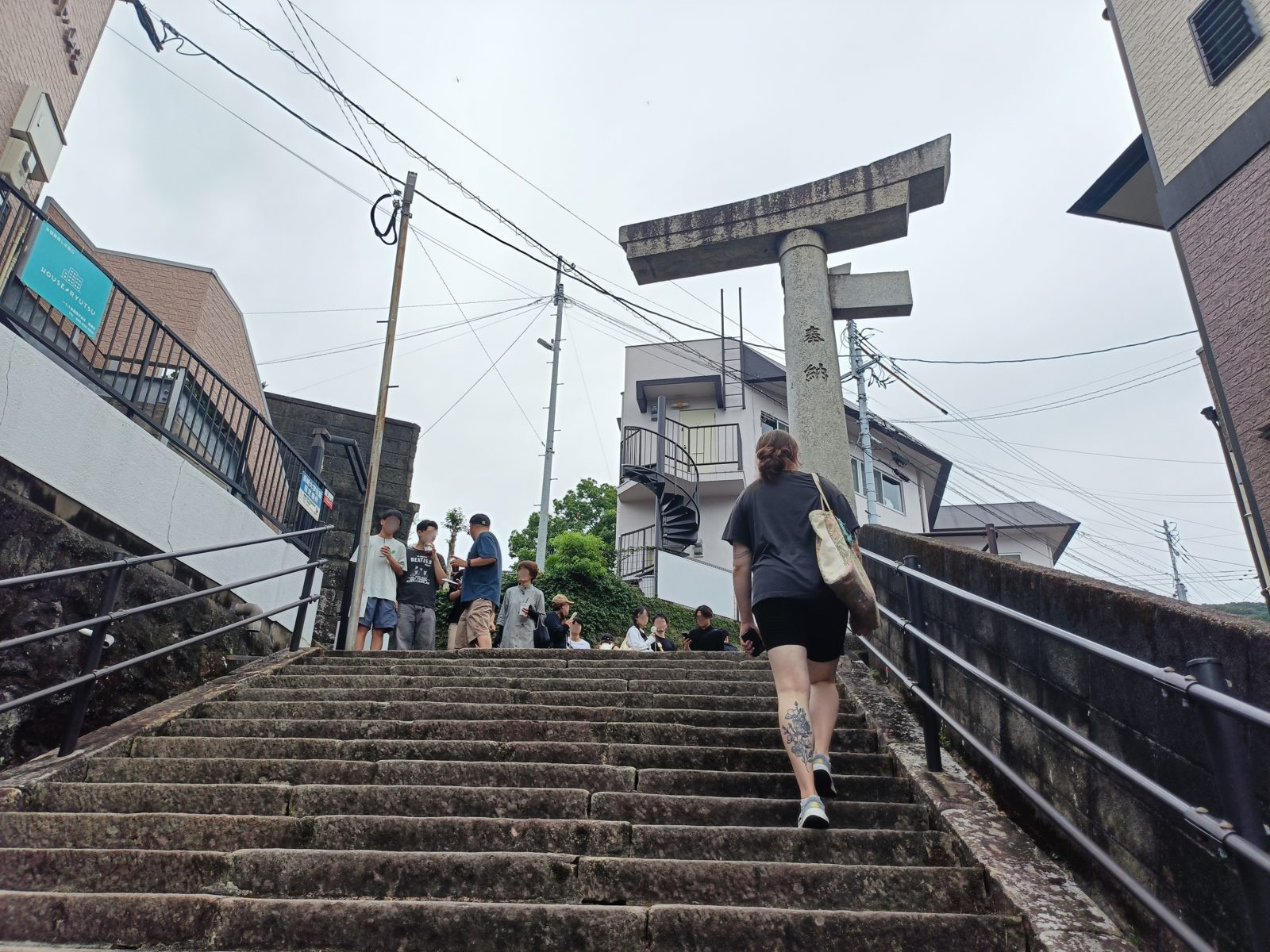
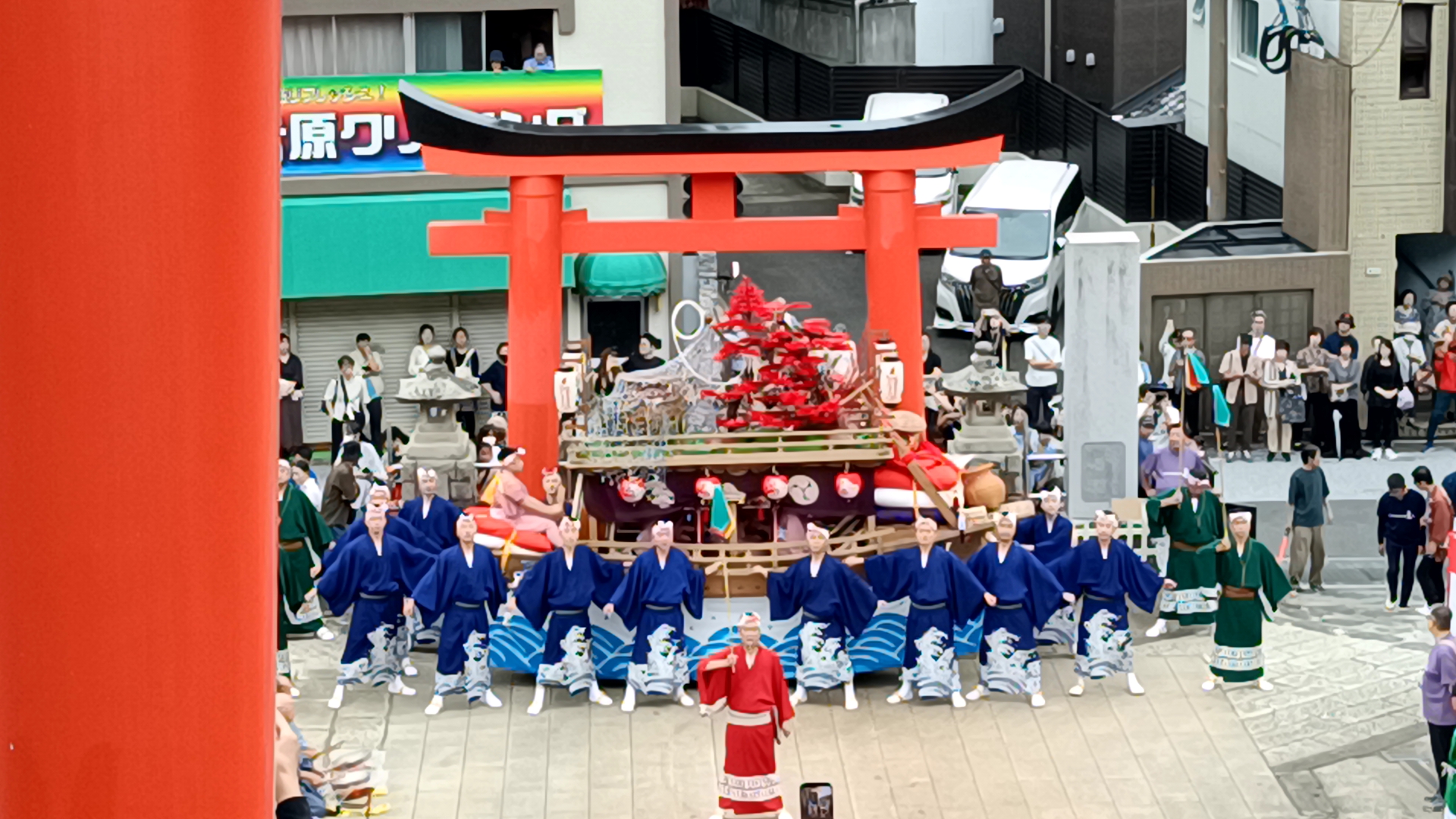
Aburaya-machi held its Niizoroi at Yasaka Shrine in Kajiya-machi. The shrine is also one of the venues for the festival itself, and the red-and-white spectator stands were already built around the courtyard. For Niizoroi, though, there are no tickets. You sit on the shrine’s stone steps, wherever you find a space, for free.
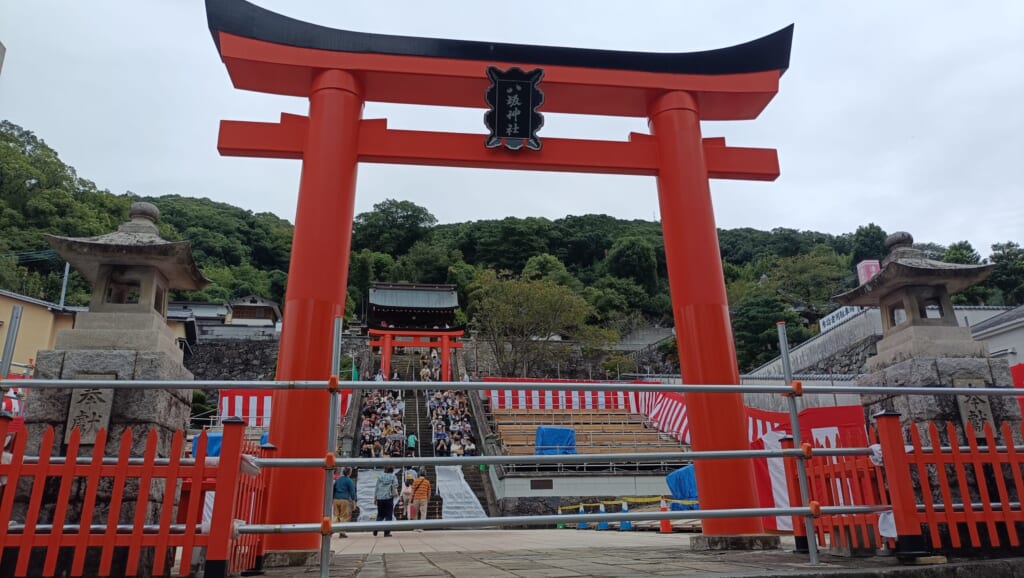
The start had been announced for 1 pm, so I arrived half an hour early and took a spot near the top of the steps. One o’clock came and went. A light rain fell. The stone was hard, and my backside began to hurt. It was a little after 2 when the performance finally began.
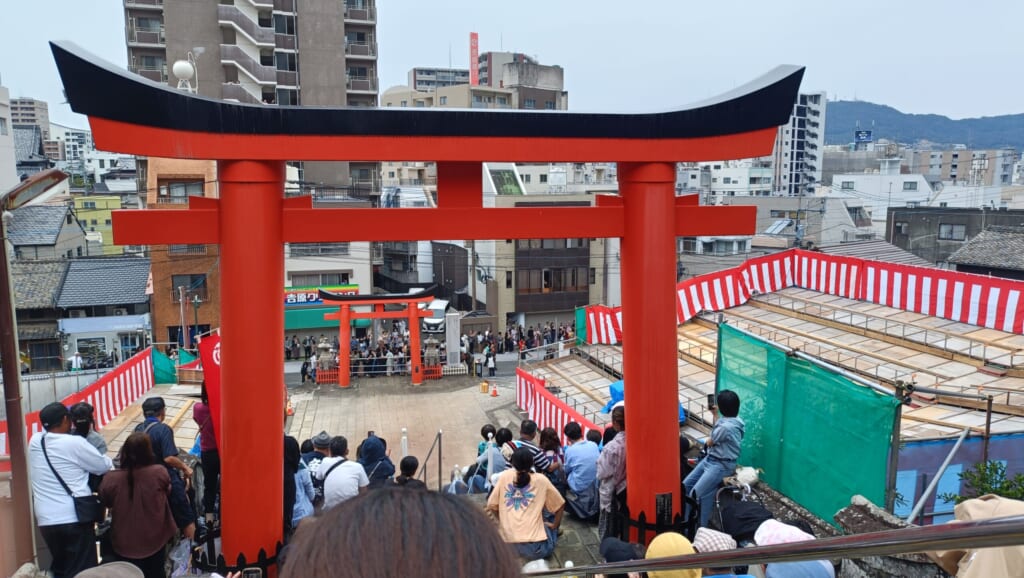
The kasaboko came first. It was the very one I had seen the night before, and from the top of the steps I could finally see how big it is. A kasaboko is said to weigh 130 to 150 kilograms, and one man carries it alone. The men of the town took turns, each lifting it and spinning. When it turned well, the crowd shouted “Yoiya!” After that long wait, the shout felt even better.
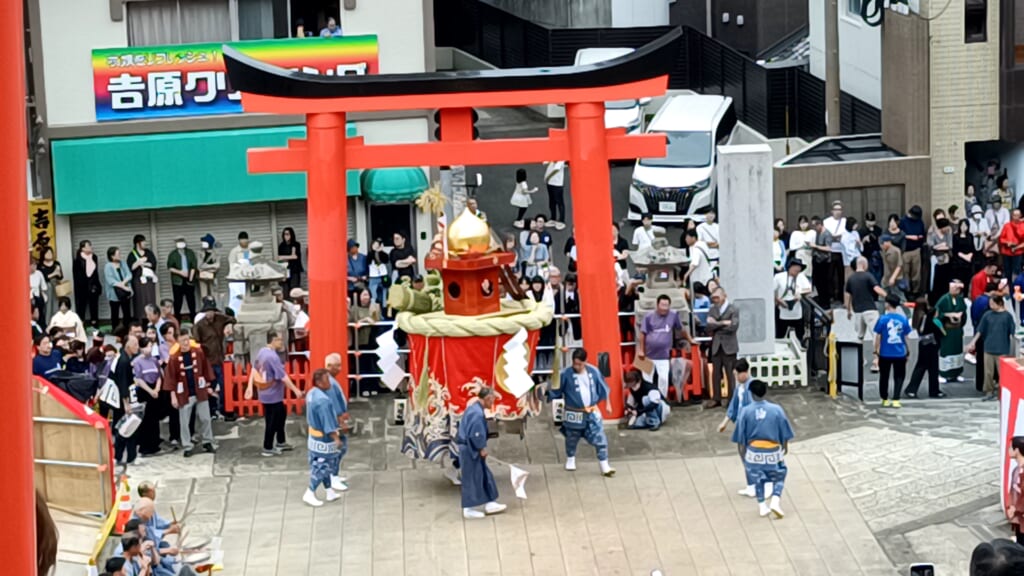
Then the kawafune, the river boat, was pulled in. It weighs about three tons. A small boy, perhaps three or four years old, sat at the bow. He had been on the boat a long time by then and looked worn out. Someone in the crowd called out his name and told him to wake up, and the steps broke into laughter. He got off the boat soon after it came in.
That was what I noticed most. The people on the lower steps were clearly classmates and neighbors of the performers. When the men lined up in front of the boat, voices called to them by name. “Looking good!” someone shouted. This is not the festival yet, and the audience is the town itself.
Then came the net-casting. This year’s net-casting captain is a first-grader. From where I sat, the crowd hid the fish, so I couldn’t see whether he caught them all. But he carried himself with complete confidence.
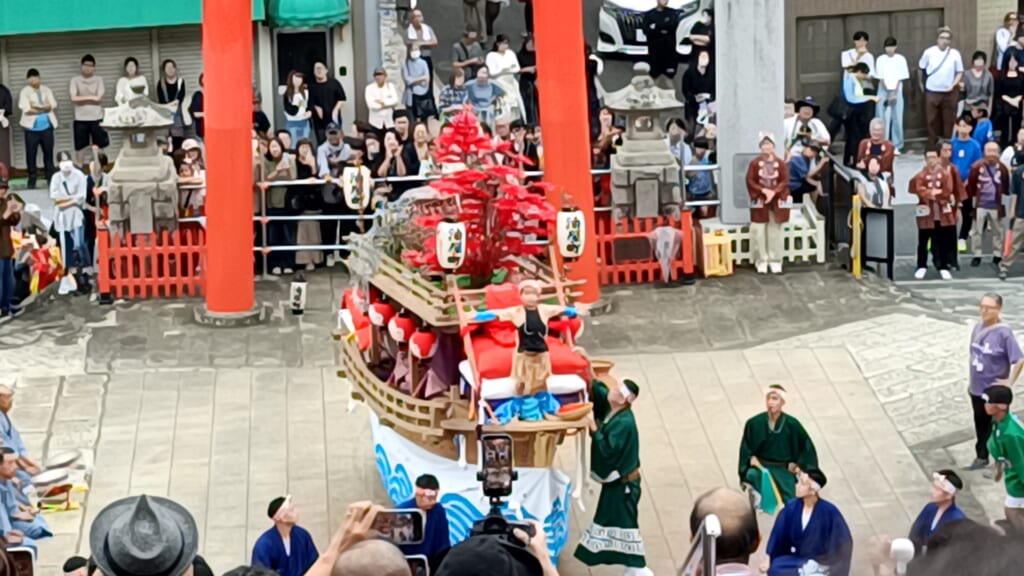
Then the men spun the boat. Each time they came in, they turned it several times and pulled it back out. The crowd shouted “Mottekoi!”, the Kunchi call for an encore, and they came back and spun it again. This happened several times. Aburaya-machi is known for stopping the boat mid-spin and reversing it in an instant, a move called uzumaki. Turning a three-ton boat is heavy labor, and I was amazed that they could keep going.
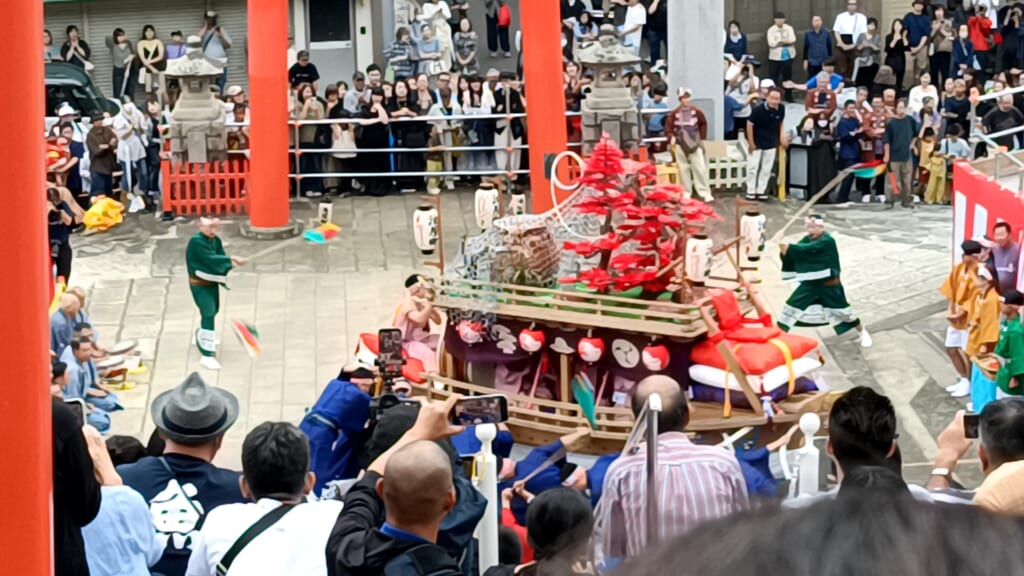
In fact, there are children inside the boat, beating drums. Their voices carried up the steps, shouting in time. Hearing them work that hard, I nearly cried.
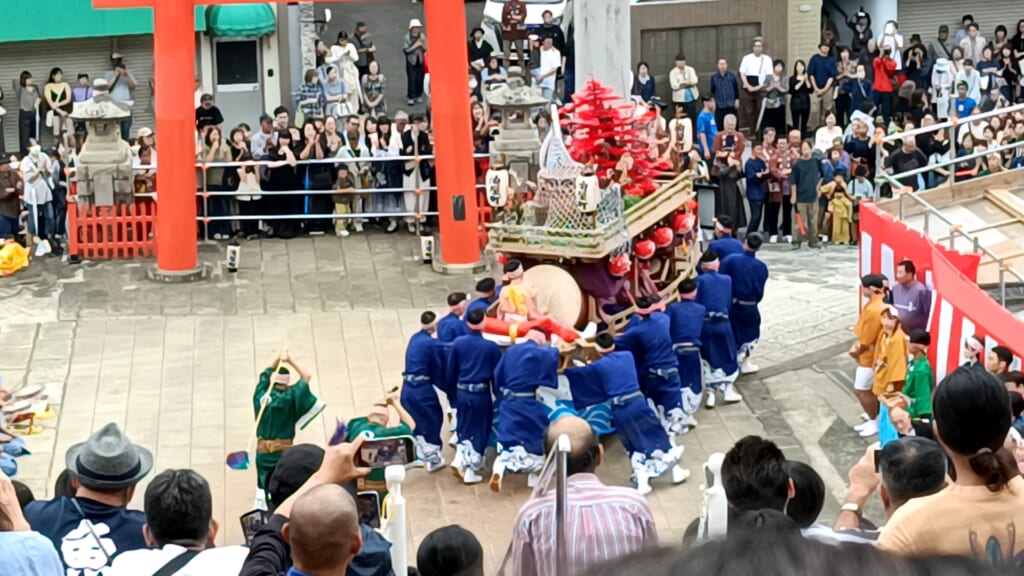
Tickets for the main Kunchi venues are hard to get. Niizoroi is free, less crowded and easier to see. More than that, it shows how deeply the festival belongs to the neighborhood.
If You Go
- When: October 4th every year, in the early afternoon. Times differ by town.
- Where: In that year’s performing towns. This year Aburaya-machi performed at Yasaka Shrine, a 3-minute walk from the Sofukuji tram stop.
- Cost: Free. No tickets. Seating is first come, first served.
- Schedule: A list of times and places is published in late September, in Japanese. Read the notes. Aburaya-machi’s said the town would tour its streets from 1 pm and then perform at the shrine, which is why it began after 2.
- Waiting: Expect to sit on stone for a long time. Bring something to sit on.
- Rain: Do not open an umbrella. It blocks the view of the people behind you. Bring a raincoat instead.
Information about Nagasaki Kunchi, especially events outside the main festival such as Niizoroi, is often announced only in Japanese. If you would like more details or need help arranging an English-speaking guide, please get in touch through our contact form.