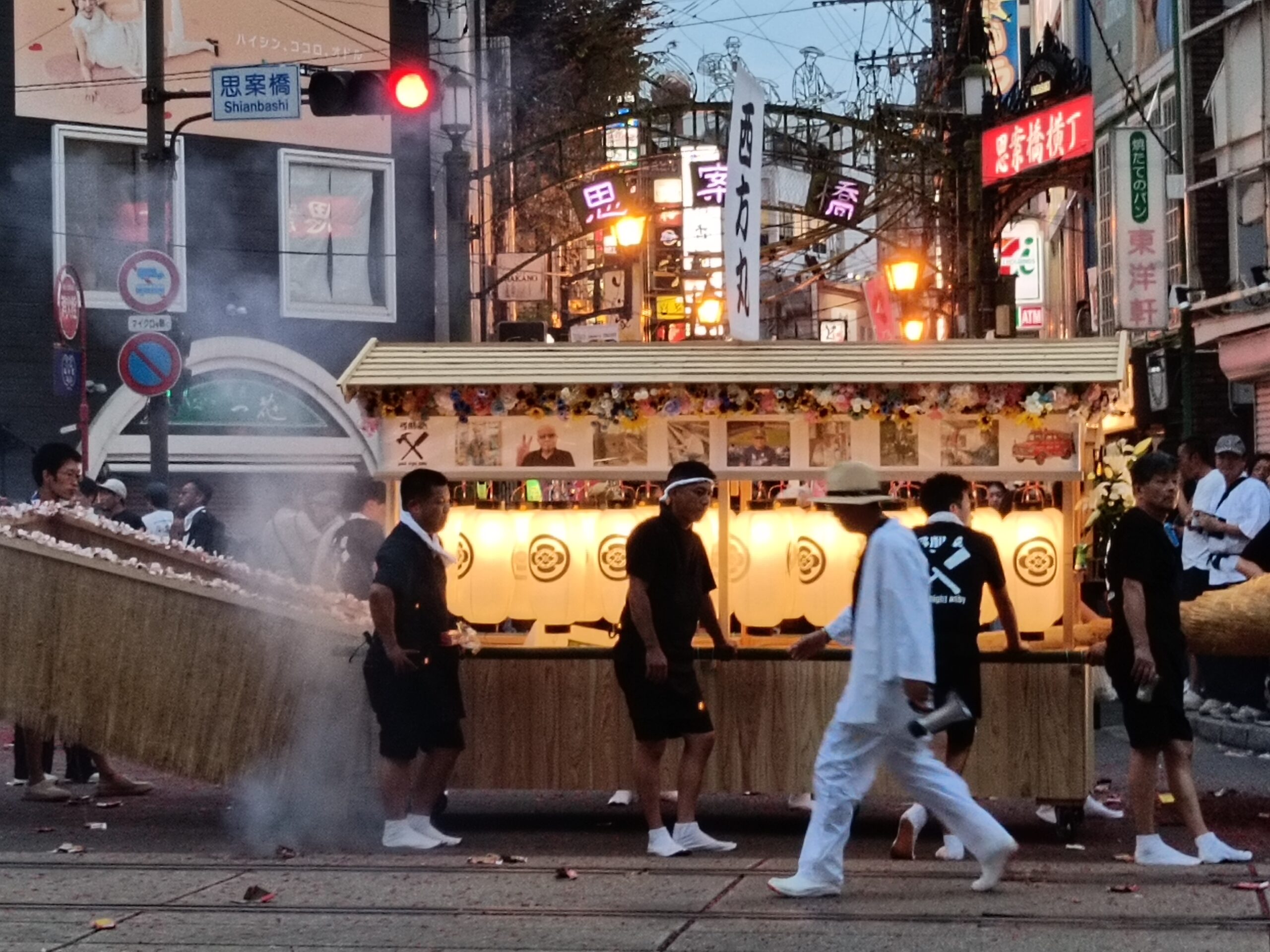
Each year on August 9, Nagasaki pauses at 11:02 a.m. — the exact moment an atomic bomb exploded over the city in 1945 — for one minute of citywide silence. This year, I spent that morning at Sannō Shrine, home to a one-legged torii gate and a camphor tree that survived the blast, to see how the city marks the day today.
Getting to Sannō Shrine
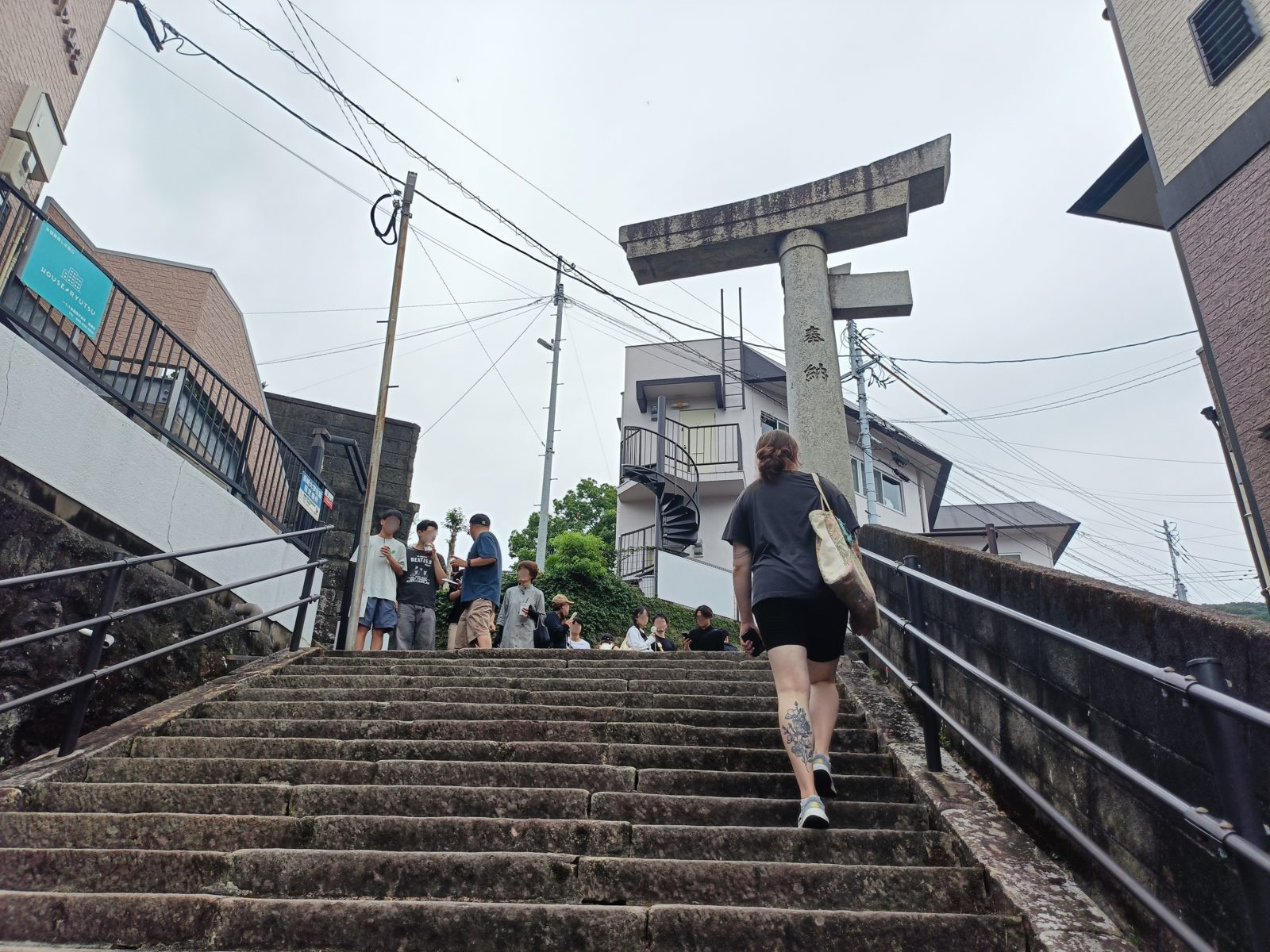
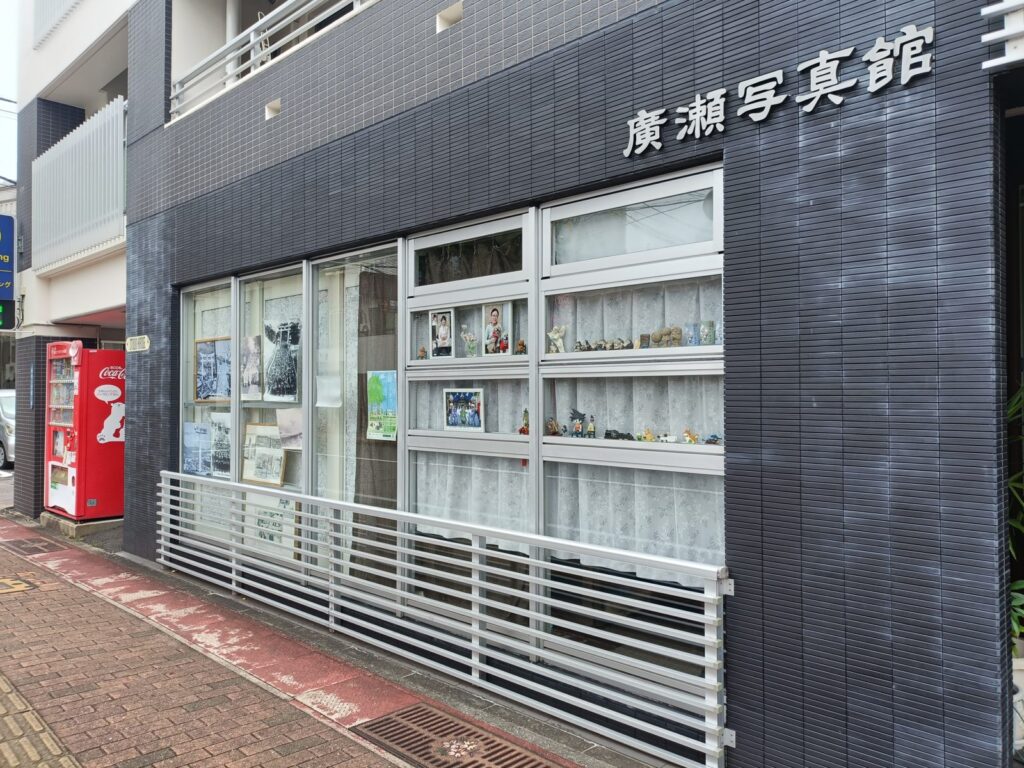
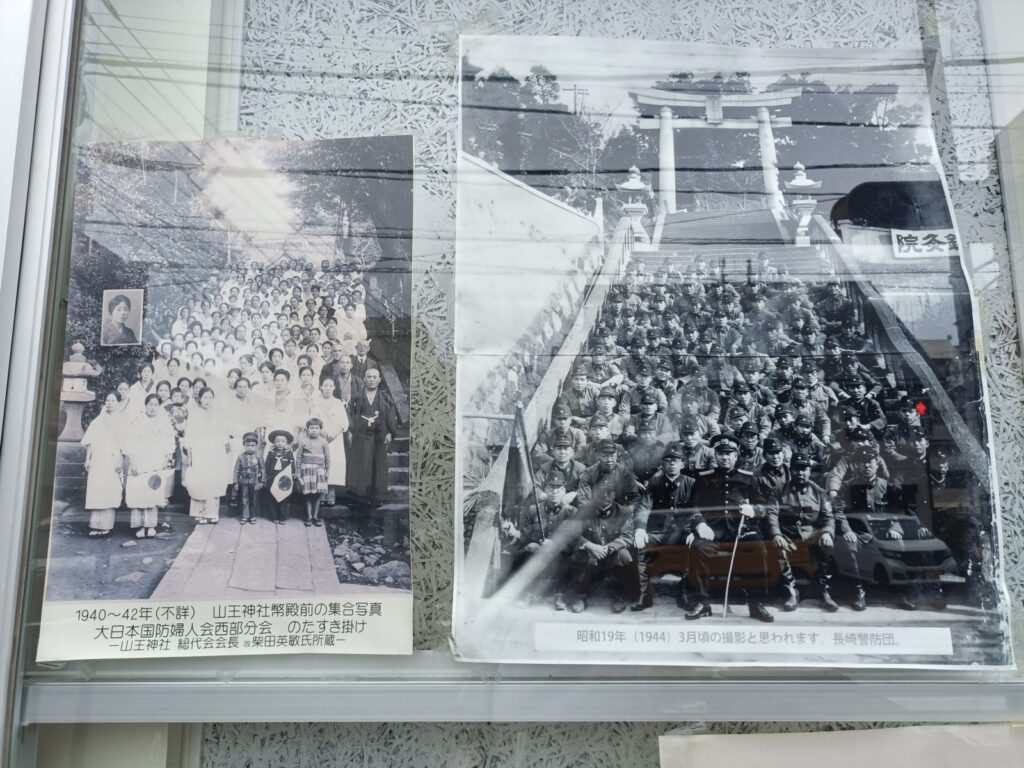
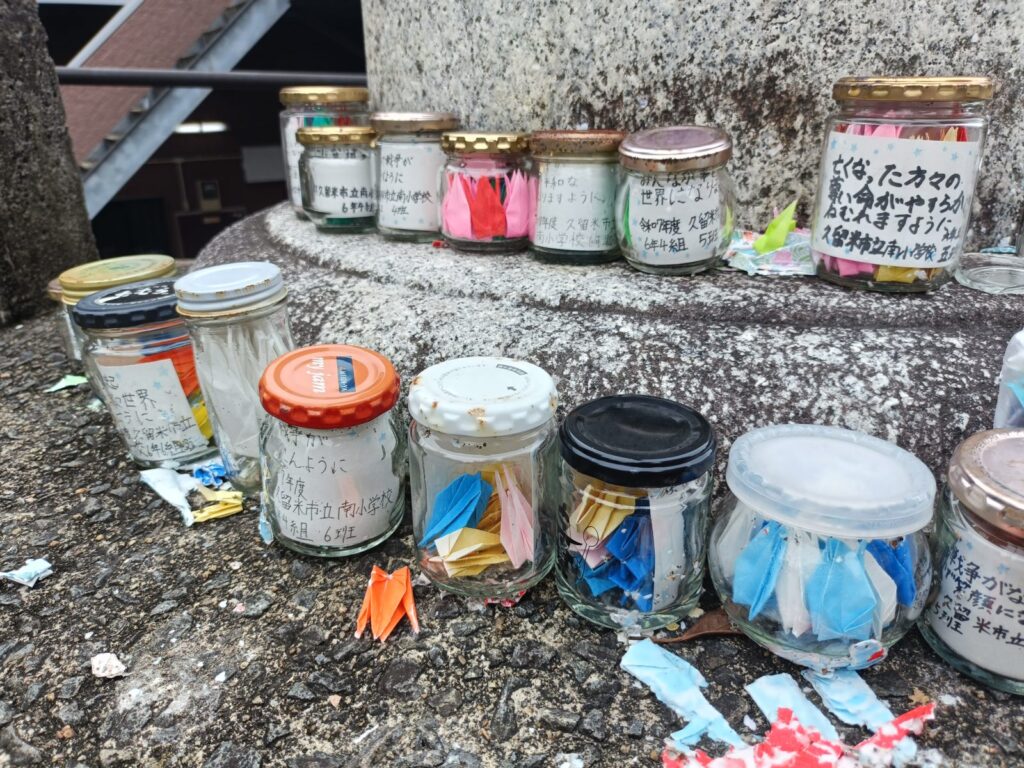
August 9th this year was cloudy — a comfortable day for walking. Near the shrine stands a small photo studio, Hirose Photo Studio, whose window displays a wartime photograph taken at this shrine. The one-legged torii itself, once meant to welcome visitors through its full frame, still stands with only its right half intact after the blast. At its base sit rows of small hand-painted jars, each carrying a peace wish written by local schoolchildren.
What Happened on August 9, 1945
At 11:02 a.m. on August 9, 1945, an atomic bomb exploded above Nagasaki. According to a report compiled by the city five years later, 73,884 people died and 74,909 were injured. Nagasaki’s population at the time was roughly 240,000 — meaning more than half of all residents were affected in some way.
“No More Hibakusha” is a phrase left by Senji Yamaguchi (d. 2013), the first hibakusha (atomic bomb survivor) to address the United Nations, in 1982, calling for the abolition of nuclear weapons. “Hibakusha” is the Japanese term for survivors of the atomic bombings, now used internationally when discussing the human toll of nuclear weapons. Under Japanese law, hibakusha status is recognized for:
- Those directly exposed to the bombing within the affected area
- Those who entered within about 2 km of the hypocenter within two weeks of the bombing
- Those involved in caring for victims or handling the deceased
- Children who were in utero to anyone in the above categories
The number of certified hibakusha in Nagasaki Prefecture fell from 45,374 in 2015 to 21,367 in 2025 — nearly half. Nationwide, the average age of certified survivors reached 86.66 (as of the end of FY2025, per Japan’s Ministry of Health, Labour and Welfare). Passing on firsthand memory is becoming harder each year — which is part of why August 9th remains a living concern for Nagasaki, not simply a historical date.
Trees That Survived
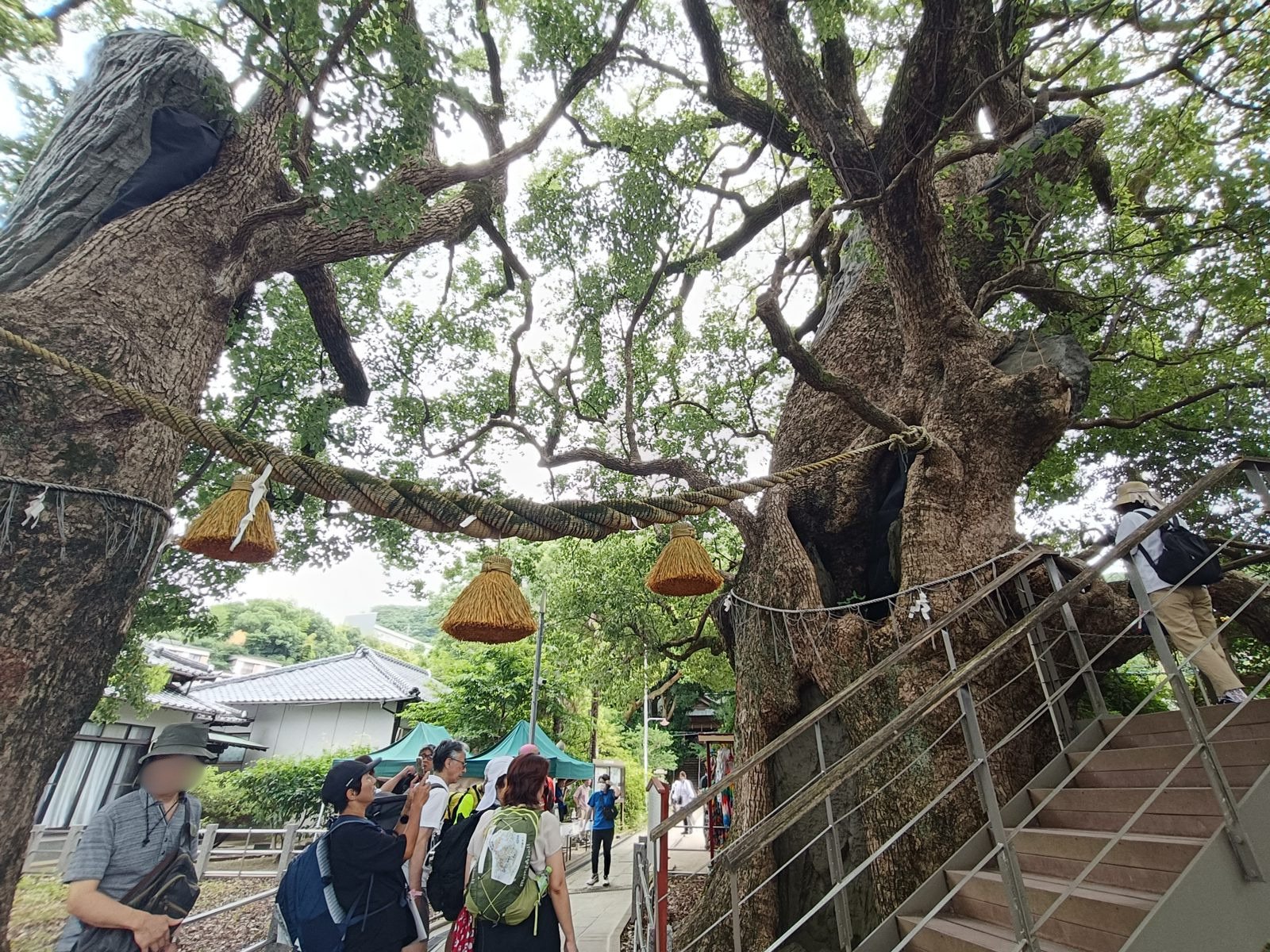
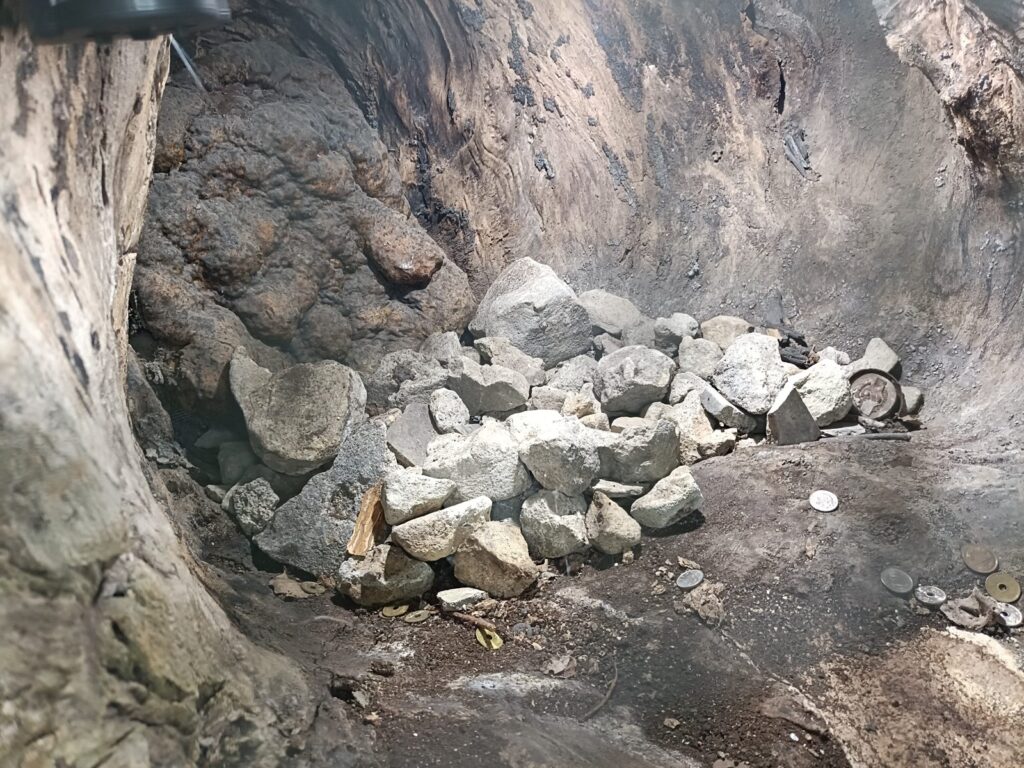
Inside the shrine grounds stands camphor trees (kusunoki) estimated to be 500–600 years old. It was once said that nothing would grow here for 70 years after the bombing — yet these trees survived from that day forward. Its trunk holds a hollow large enough for one or two adults to crouch inside, where a stone blown in by the blast still remains.
A Morning Carried by the Next Generation
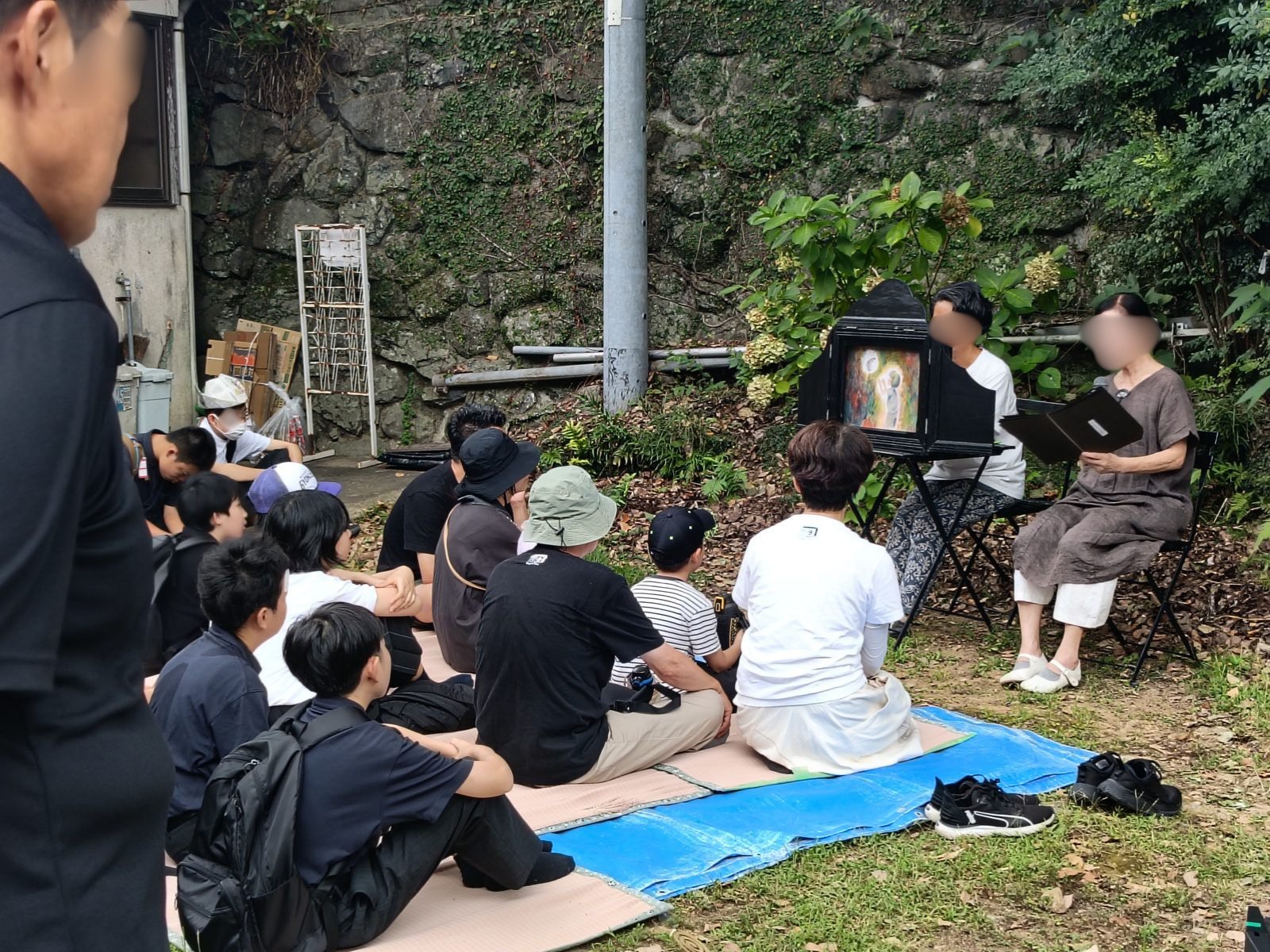
The shrine grounds were full of visitors that morning. Local high school students listened as a kamishibai (Japanese picture-story performance) themed around Sannō Shrine was read aloud.
Then, at 11:02 a.m., people gathered in a circle for a moment of silence, led by local university students. In Nagasaki, sirens sound both at 8:15 a.m. on August 6 (the time of the Hiroshima bombing) and at 11:02 a.m. on August 9 (the time of the Nagasaki bombing) — a citywide signal for silent prayer, and a way the city ensures the memory is never forgotten.
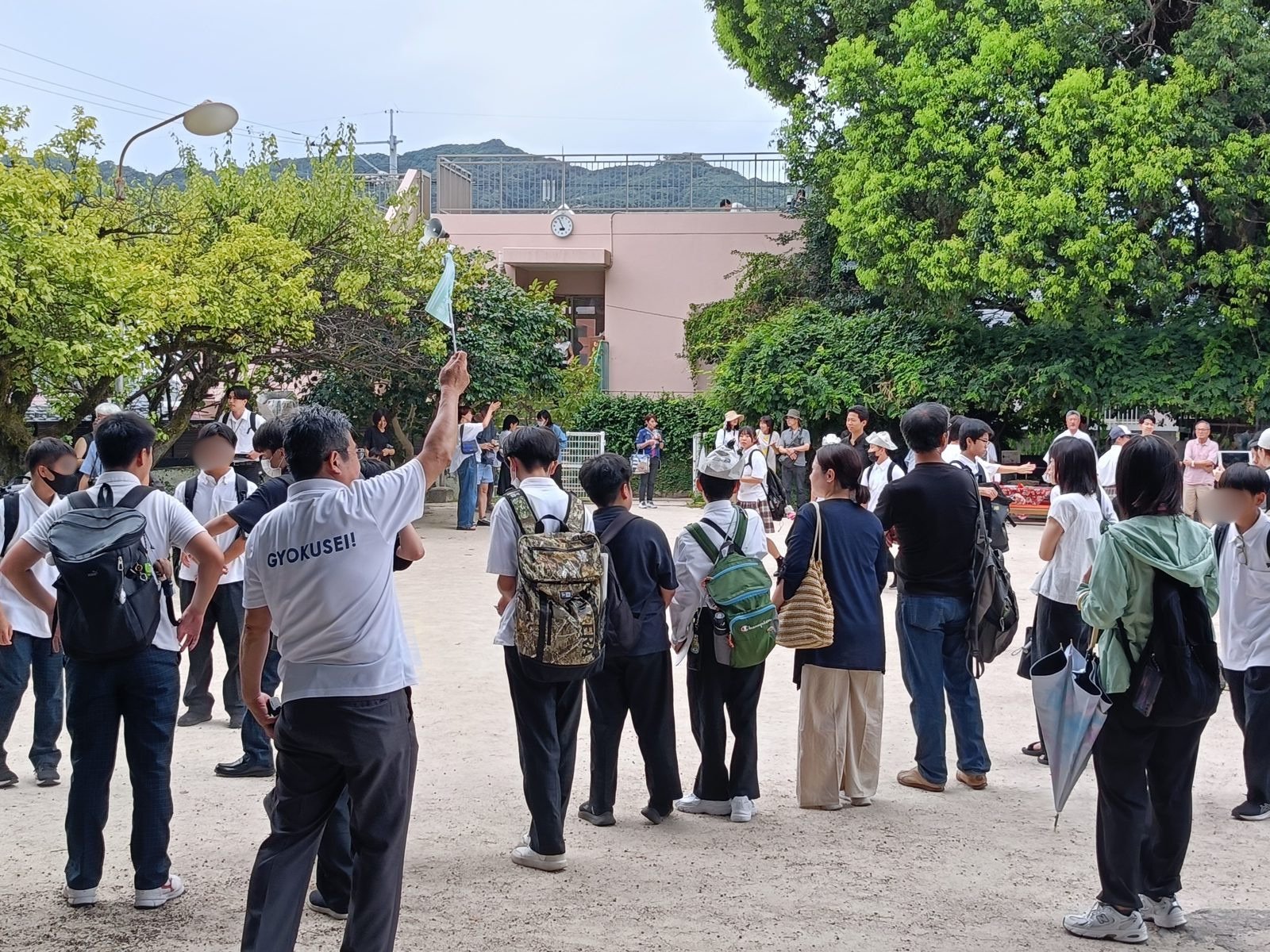
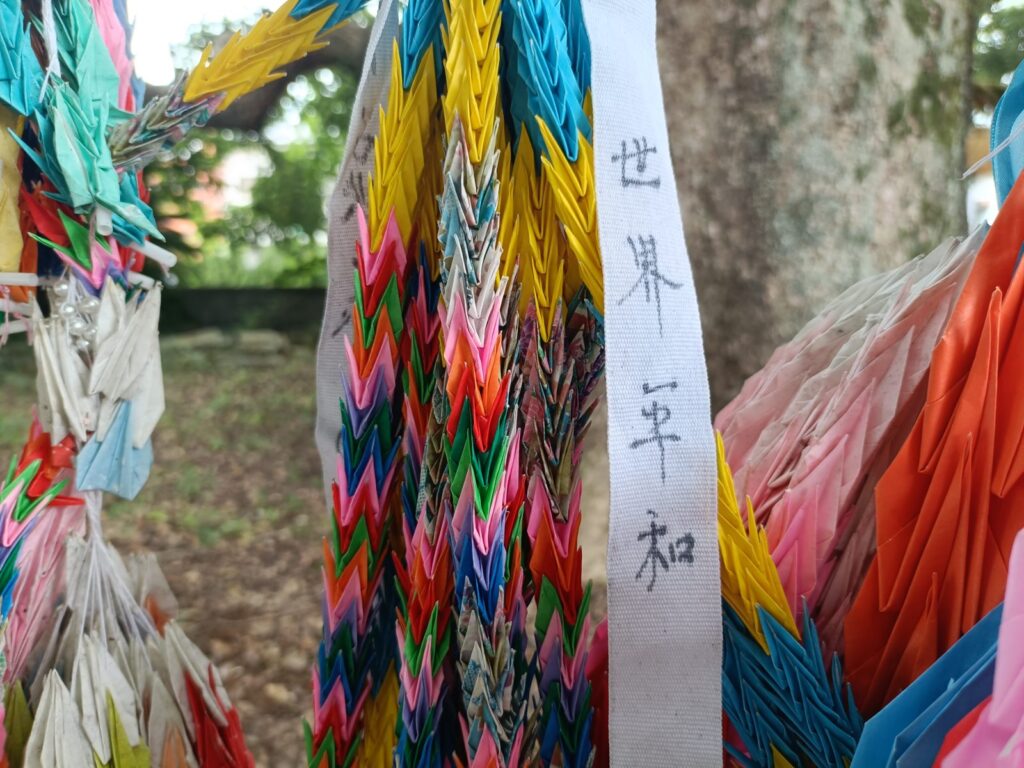
High school students, university students, local families, and visitors from abroad all closed their eyes together for that one minute, praying for peace. Paper cranes tied nearby bore the words “World Peace.”
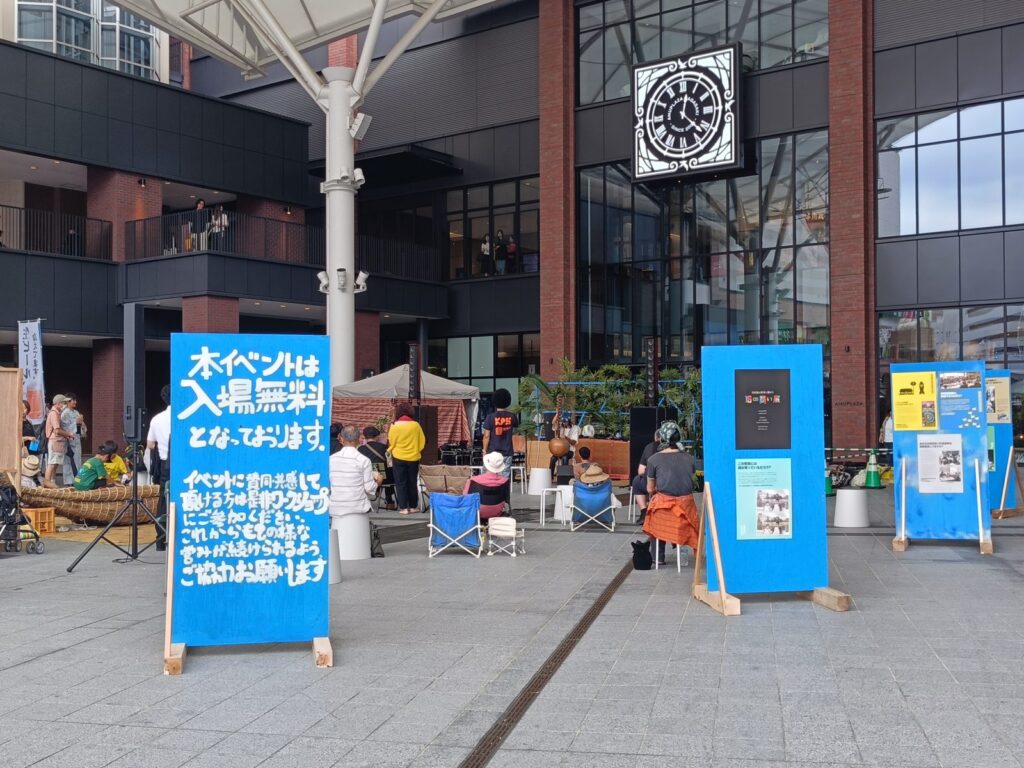
Later that day, a music event for peace was held in the square outside Nagasaki Station — also organized by the city’s younger generation.
How to Hear a Hibakusha’s Testimony
The number of hibakusha is shrinking every year, but it’s still possible to hear a firsthand account directly from an atomic bomb survivor. These talks are paid (roughly $150 USD as of 2026) and require advance application in Japanese. If you’d like to arrange one, please reach out through this site’s contact form.
Visitor Info
- Place: Sannō Shrine
- Address: 2-6-56 Sakamoto, Nagasaki
- Access: About a 5-minute walk from the “Nagasaki Daigaku Byoin-mae” tram stop
- Highlights: The one-legged torii (about 800m from the hypocenter), the surviving camphor tree (a Nagasaki City Natural Monument)
- Best time to visit: Open year-round; on August 9th, locals gather in the morning and observe a moment of silence at 11:02 a.m. — visitors are welcome to join quietly
- Nearby: Walkable from the Atomic Bomb Museum and Peace Park