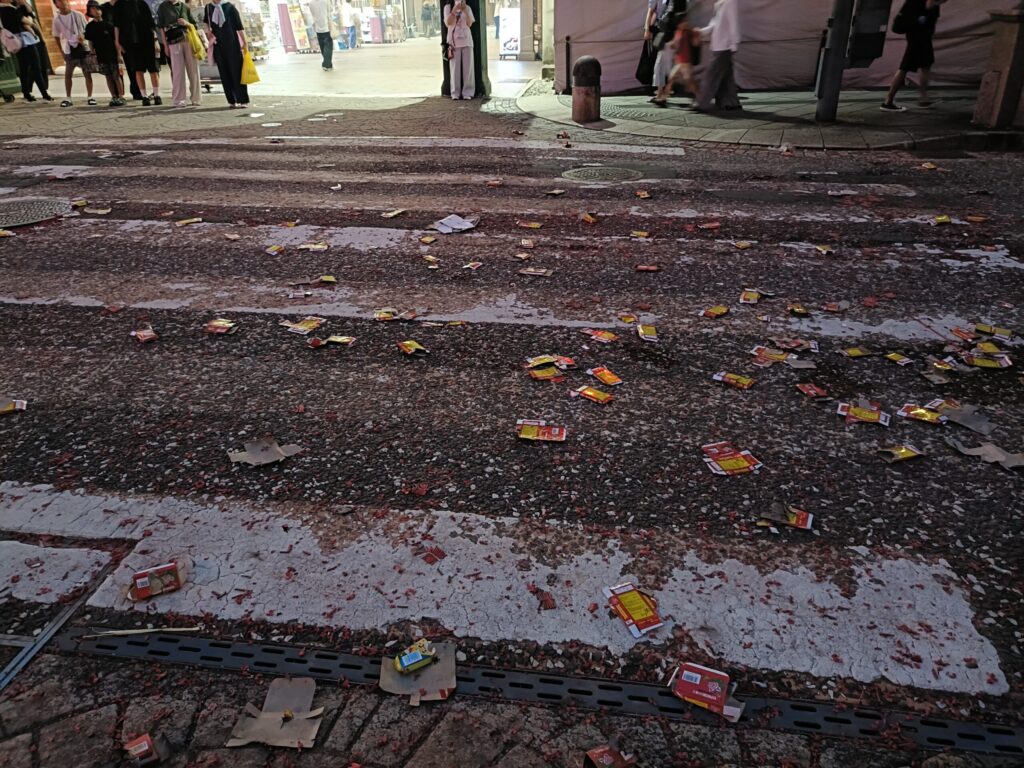
There is exactly one day a year when Nagasaki lets you set off firecrackers all night long, right in the middle of downtown streets. That day is August 15th, when the city holds a tradition called Shoro Nagashi (精霊流し), the “Farewell to Spirits.”
In Japan, August 13th to 16th is known as Obon, a period when the spirits of ancestors are believed to return home. Families gather at their family homes, visit graves, and share meals together. Many companies and shops close for the holiday, and for many Japanese, Obon effectively functions as their summer vacation.
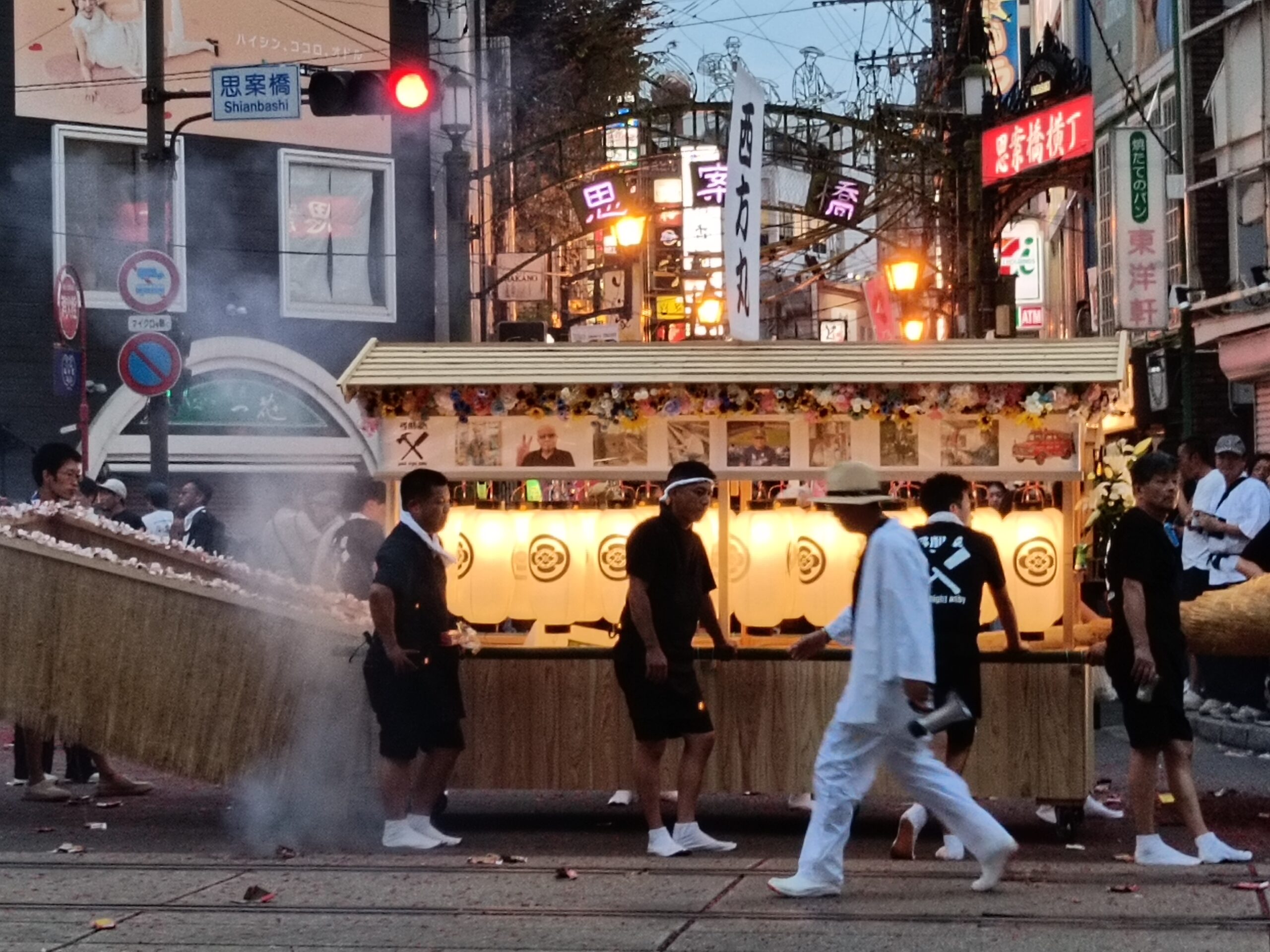
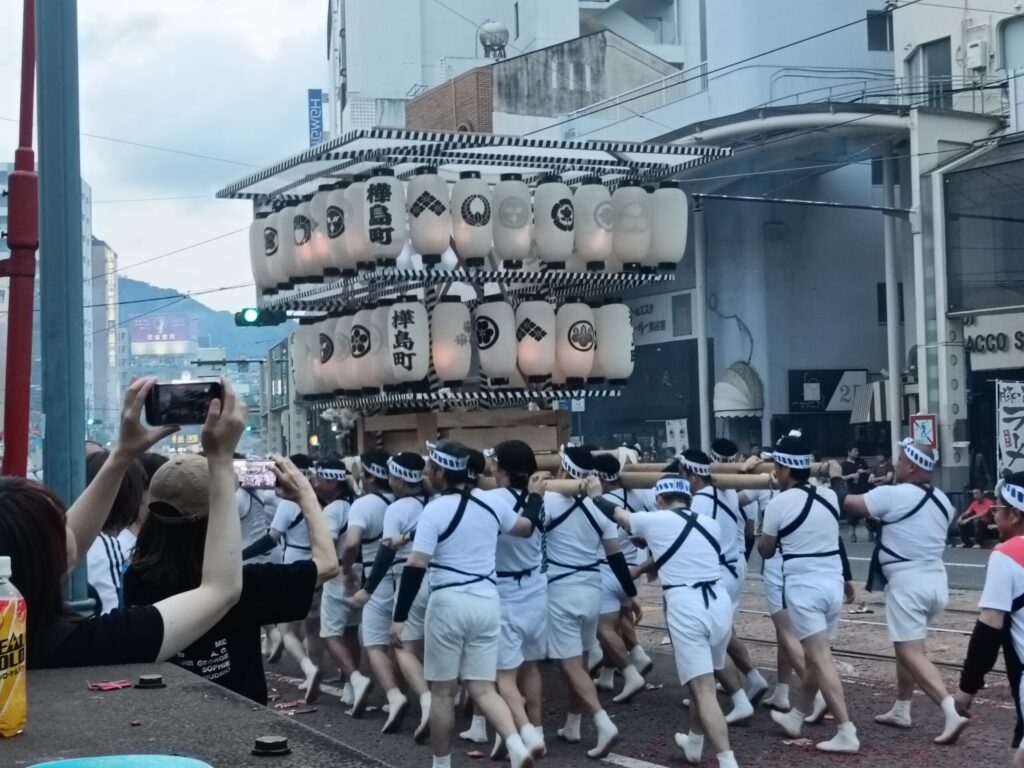
Shoro Nagashi is a tradition unique to Nagasaki, held during this Obon season. Families pull large boats called shoro-bune (精霊船, “spirit boats”), carrying the soul of a deceased loved one, through the streets while setting off firecrackers non-stop. The boats are sent out by families observing their first Obon since a family member’s passing, known as hatsubon. From the evening into the night of August 15th, the roads in the city center are closed to traffic and transformed into a procession route for these boats.
There are a few different types of spirit boats. Some families send out an individual boat of their own (kojin-bune), while others join together through a neighborhood association, a cemetery, or a funeral hall to send out a shared boat, called a moyai-bune.
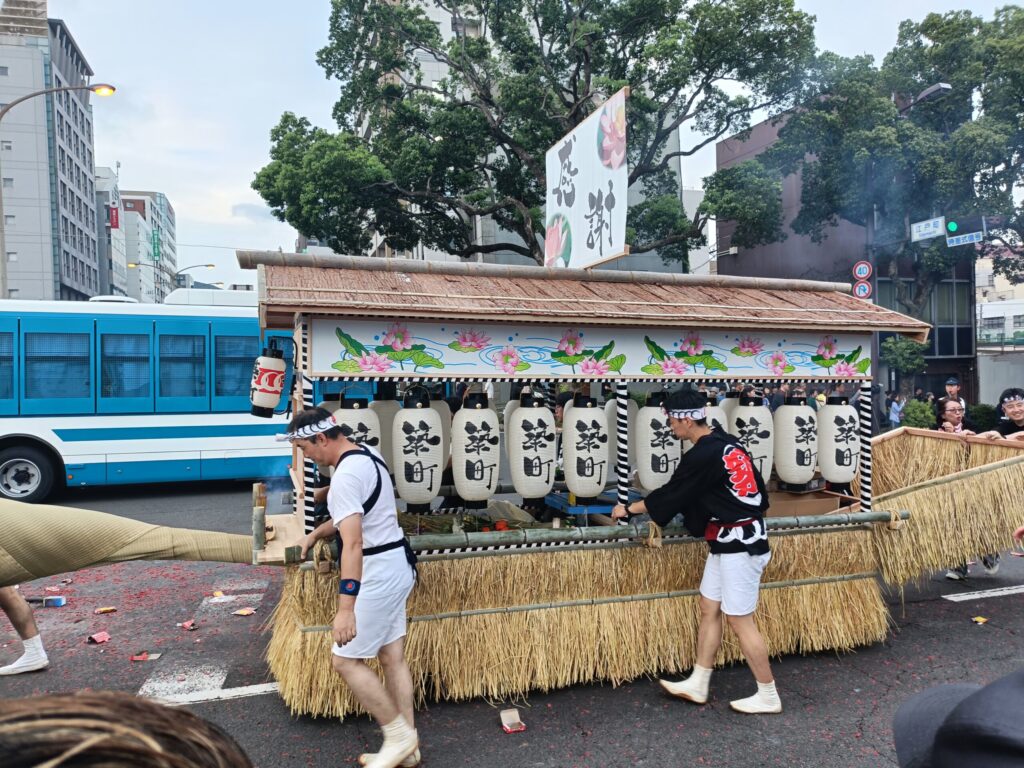
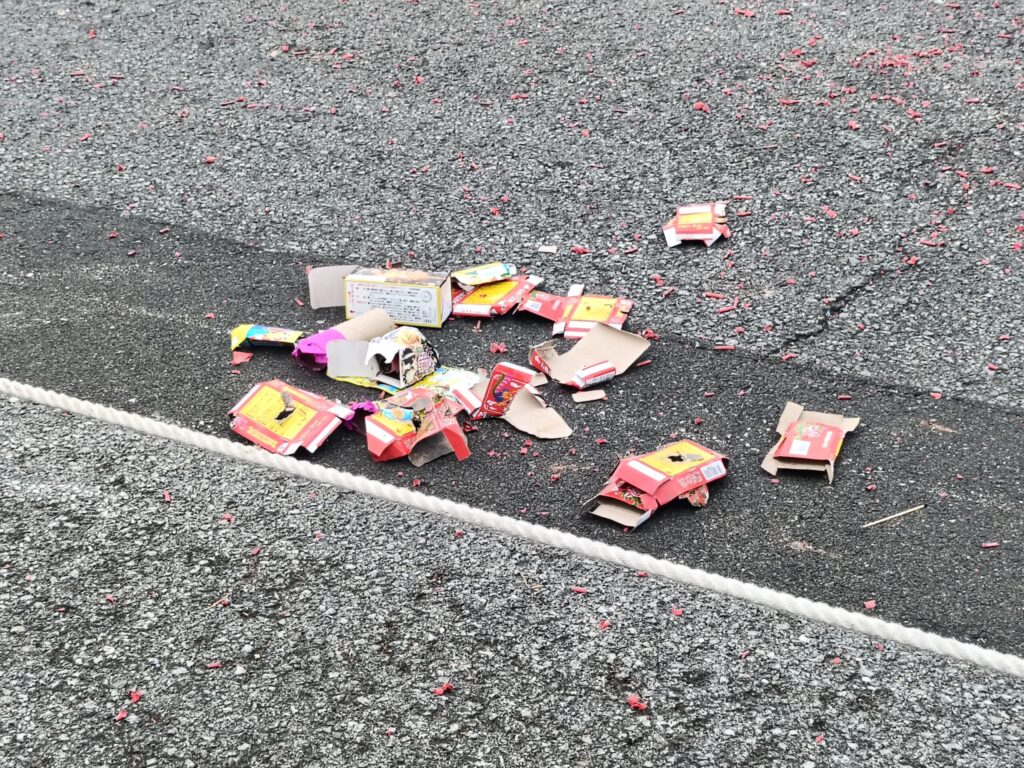
Families walk alongside their boats, setting off enormous quantities of firecrackers as they go, and some people set off handheld fireworks as well. Crowds of spectators line the streets, and because the firecrackers are so loud, many wear earplugs to watch.
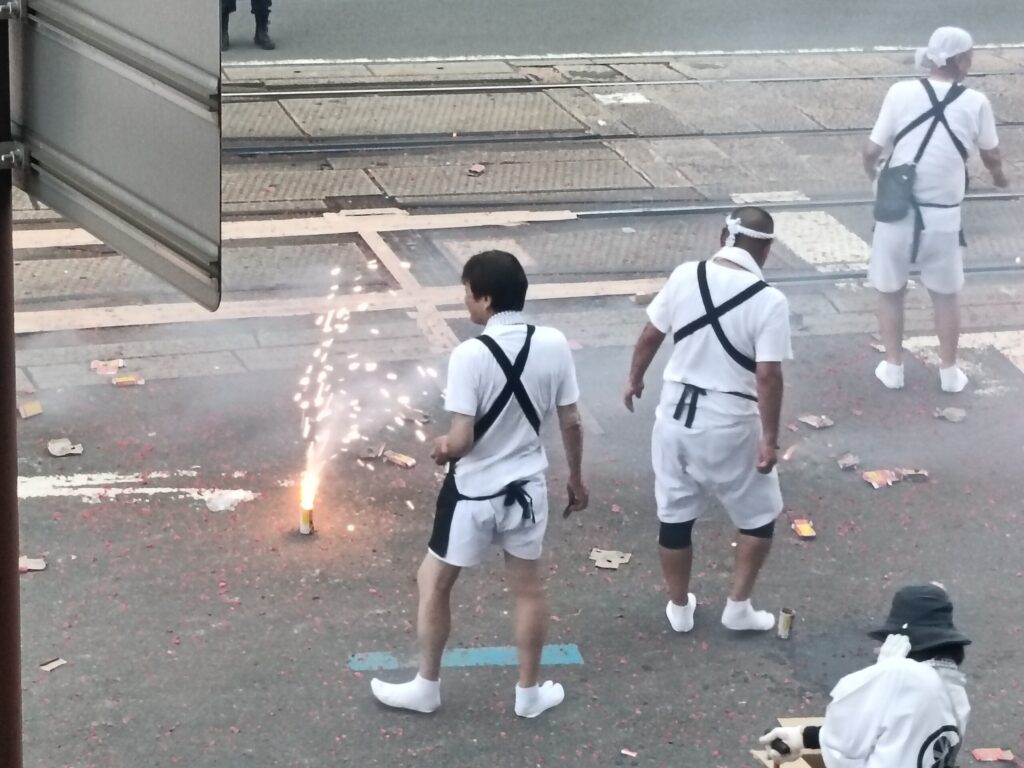
The firecrackers are meant to ward off evil spirits, ensuring the deceased reach paradise safely. This custom carries the influence of Chinese culture, a legacy of Nagasaki’s long history of trade with China and its historically large Chinese resident community.
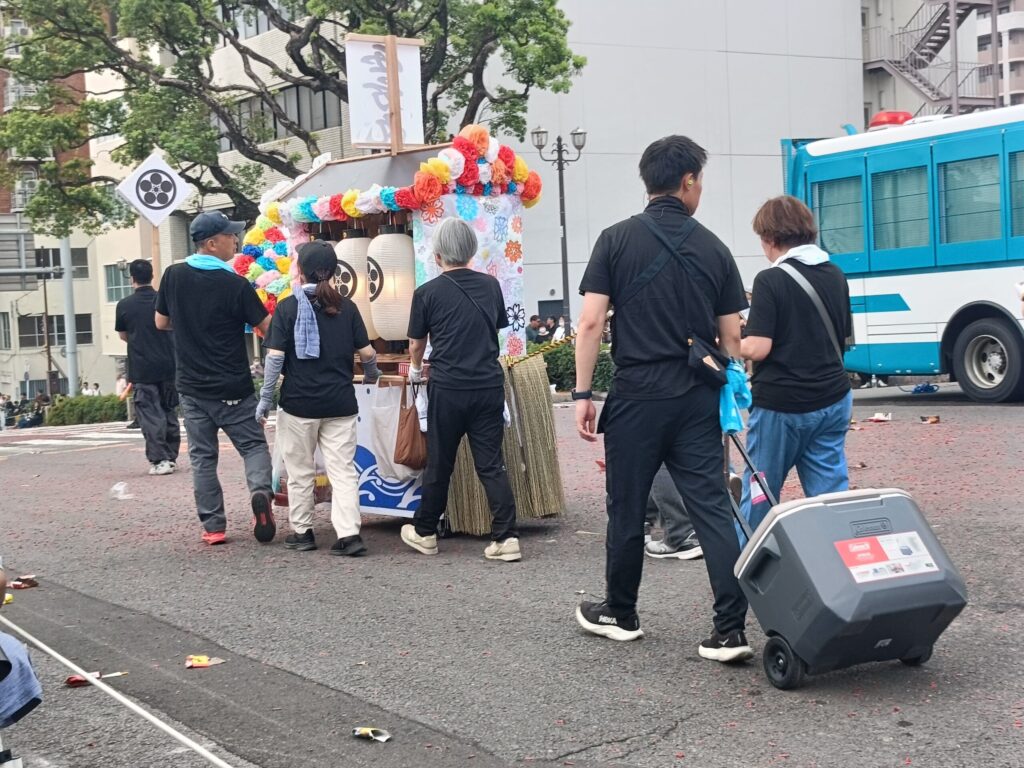
At the front of each boat sits a portrait of the deceased. Most are elderly, but every so often you’ll see a portrait of someone clearly young, and encountering one of those boats can be quietly heartbreaking. The boats themselves are decorated with things the deceased loved in life, or painted with images that meant something to them: Hello Kitty, the logo of a favorite baseball team, the mascot of a company they once ran. The variety is remarkable.
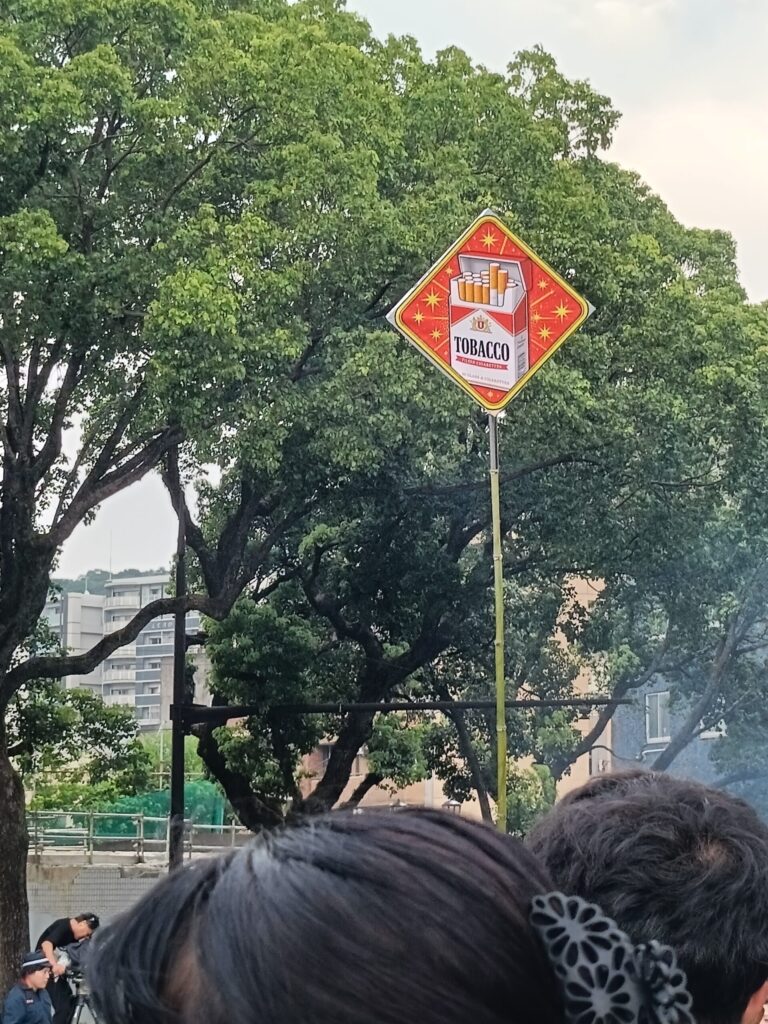
On one of the pole lanterns leading a boat, I once saw a drawing of a cigarette pack. The deceased, I assumed, must have been quite the heavy smoker. Boat by boat, these small details reveal something of the life each person lived and what they loved.
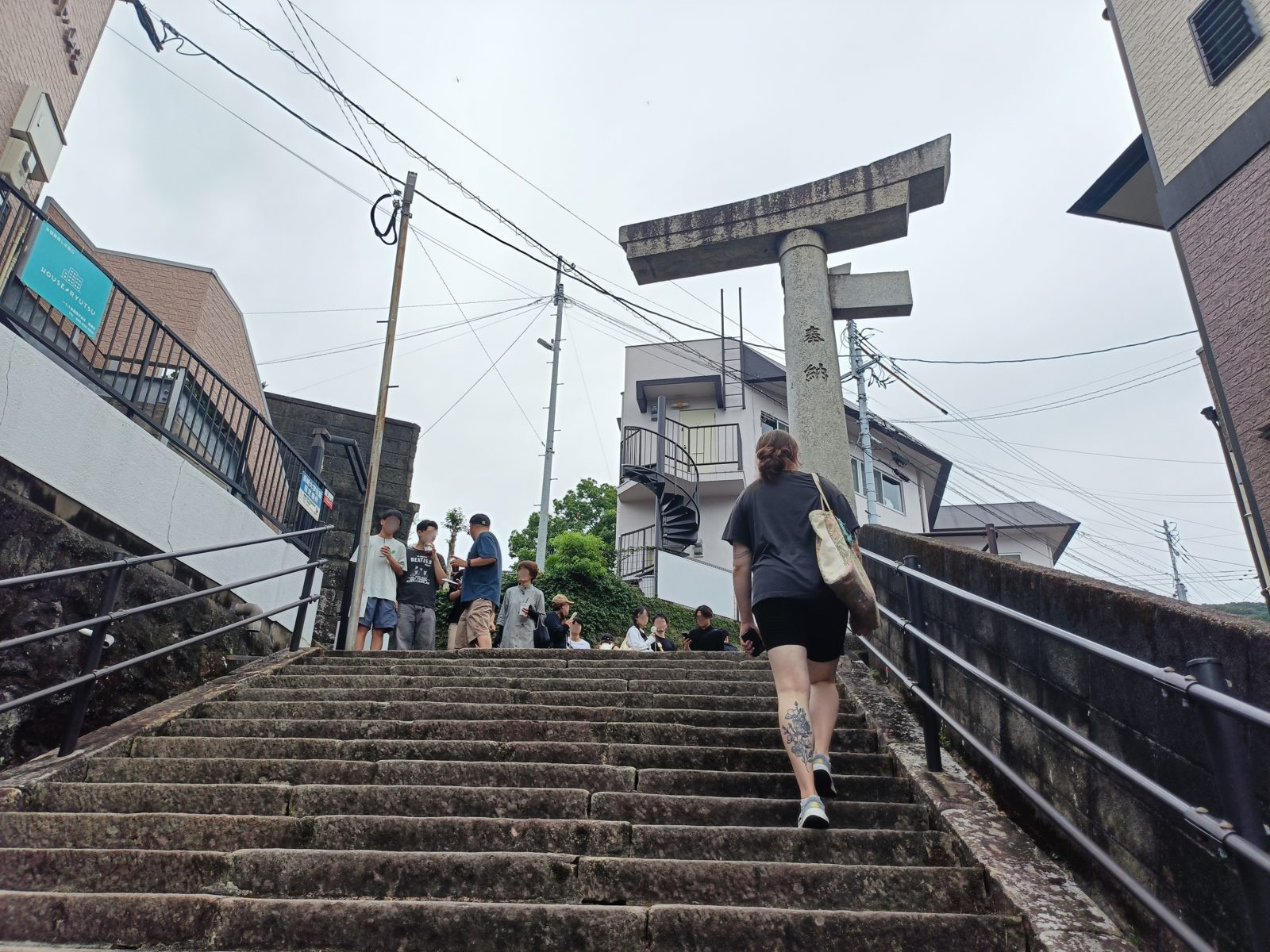
This year, I spent much of my time watching from the top of Kencho-zaka (Prefectural Office Hill). Afterward, I made my way around to Chuo-bashi, Shianbashi, and finally to the nagashiba, the site where the spirit boats are ultimately brought in and dismantled. Crowds are large, but there are plenty of spots where even visitors from out of town can get a good view.
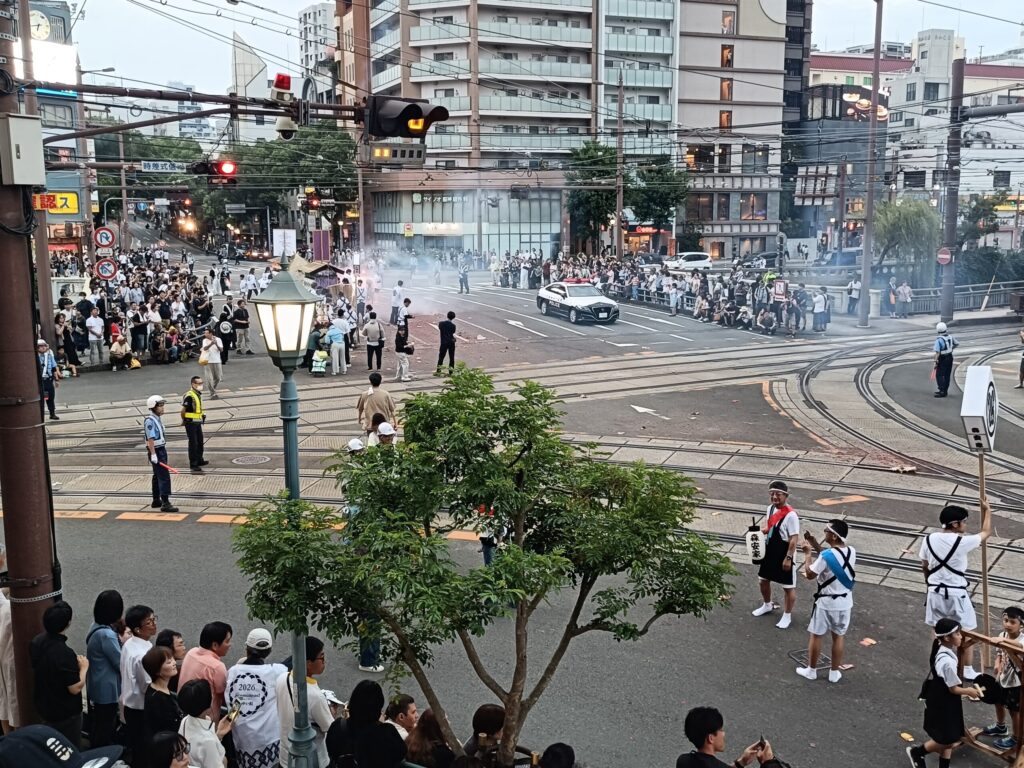
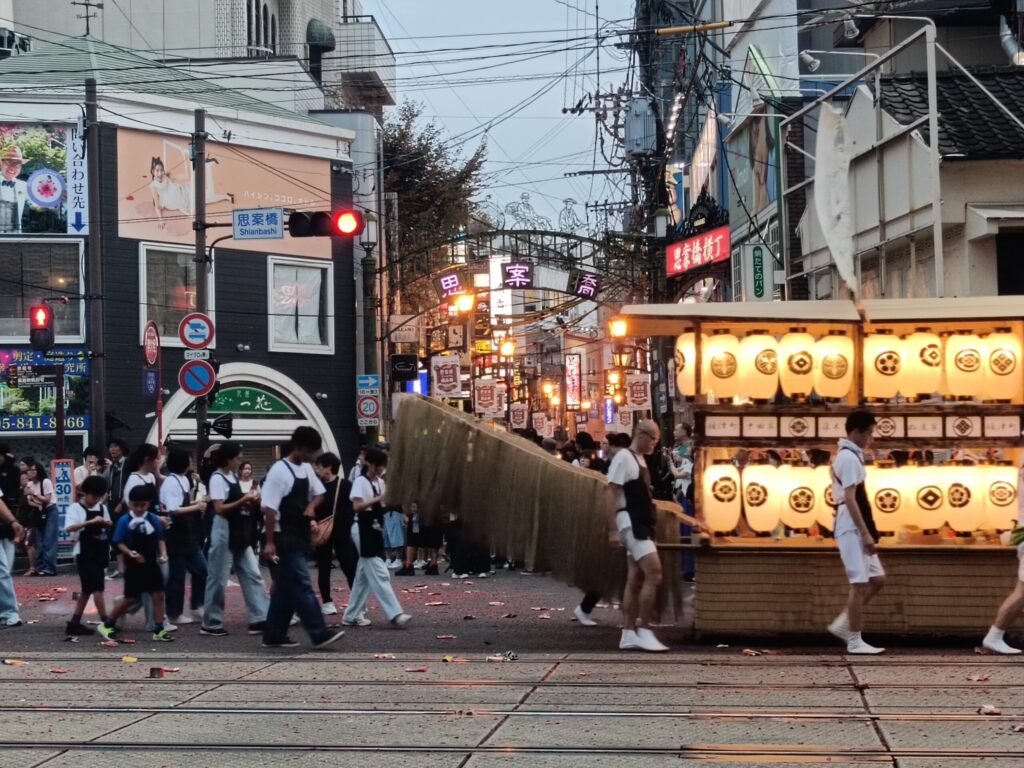
The atmosphere is nothing short of lively. With firecrackers going off constantly, anyone who stumbled upon the scene without knowing what it was might well mistake it for a festival. In fact, a young man I overheard, who seemed to be visiting from outside the prefecture, muttered, “They’re really doing whatever they want out here.”
If you want to watch from the front row, earplugs are essential — earphones can work in a pinch, but the surrounding air fills with so much smoke it turns nearly white. That smoke smells close to incense, and I happen to like it. The firecrackers aren’t lit one at a time; whole boxes are set off at once.
I have to say, I love this custom of sending someone off with so much noise and life. Rather than mourning quietly, there’s something distinctly Nagasaki about sending the dead off with a bang, and I find that kind of brightness moving.
Shoro Nagashi gets underway around 5:00 pm.
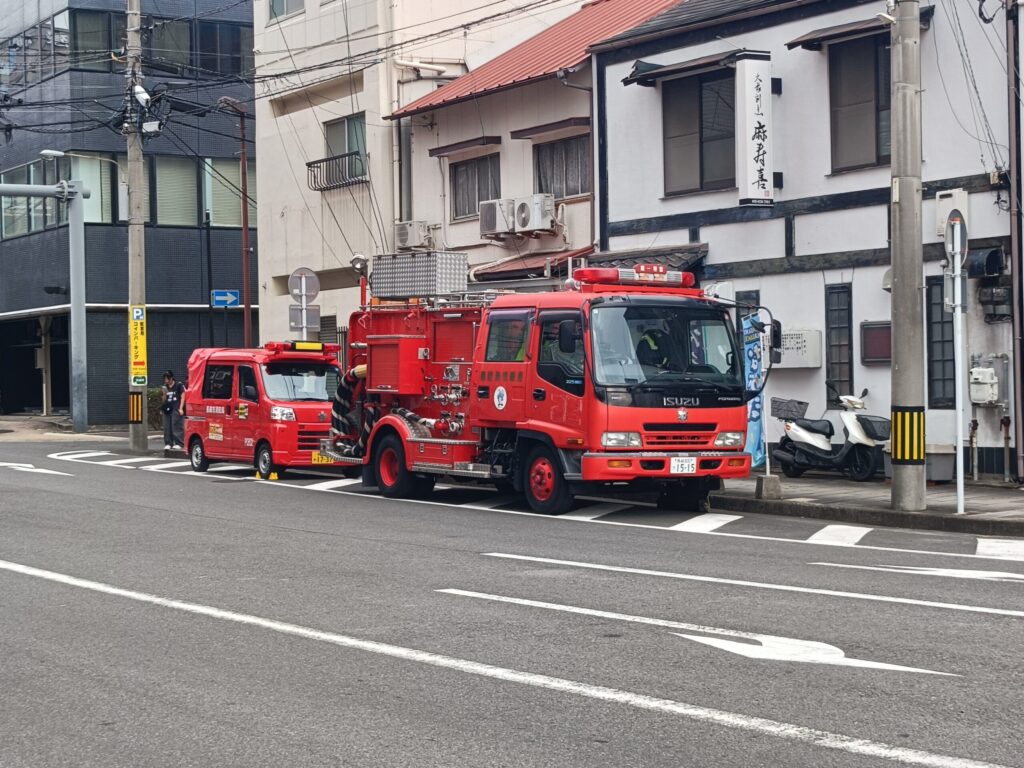
If you’re not sure where to watch from, head first to Yumesaito, the shopping mall downtown. From there, just follow the flow of the crowd and you’ll naturally end up along the boats’ route. Spectators watch from the sidewalks — stepping into the road itself is strictly off-limits.
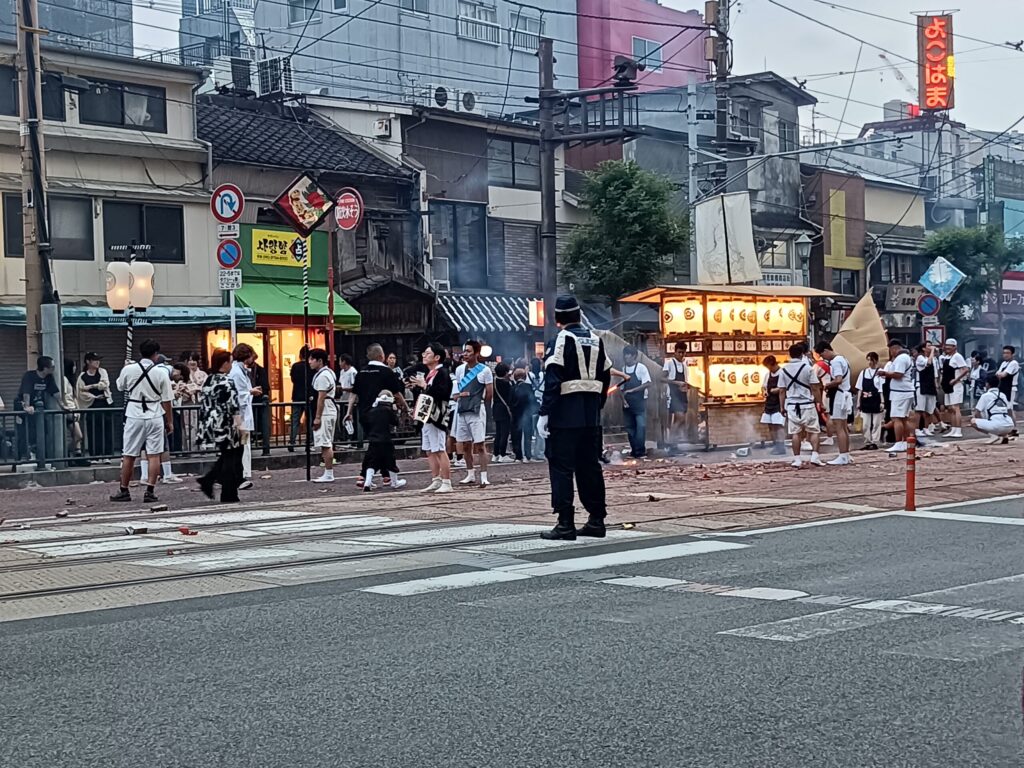
You’re free to take photos, but it’s worth remembering that for the families involved, this is a solemn occasion of sending off someone they loved, and treating their privacy with care matters.
As the day approaches, the 100-yen shops nearby stock up on earplugs, so you can easily pick some up locally if you need them.
If you ever find yourself in Nagasaki, I hope you’ll spend the night of August 15th here with us. Between the noise of the firecrackers, the smoke in the air, and the laughter and tears all mixed together, it’s a night unlike anywhere else.